
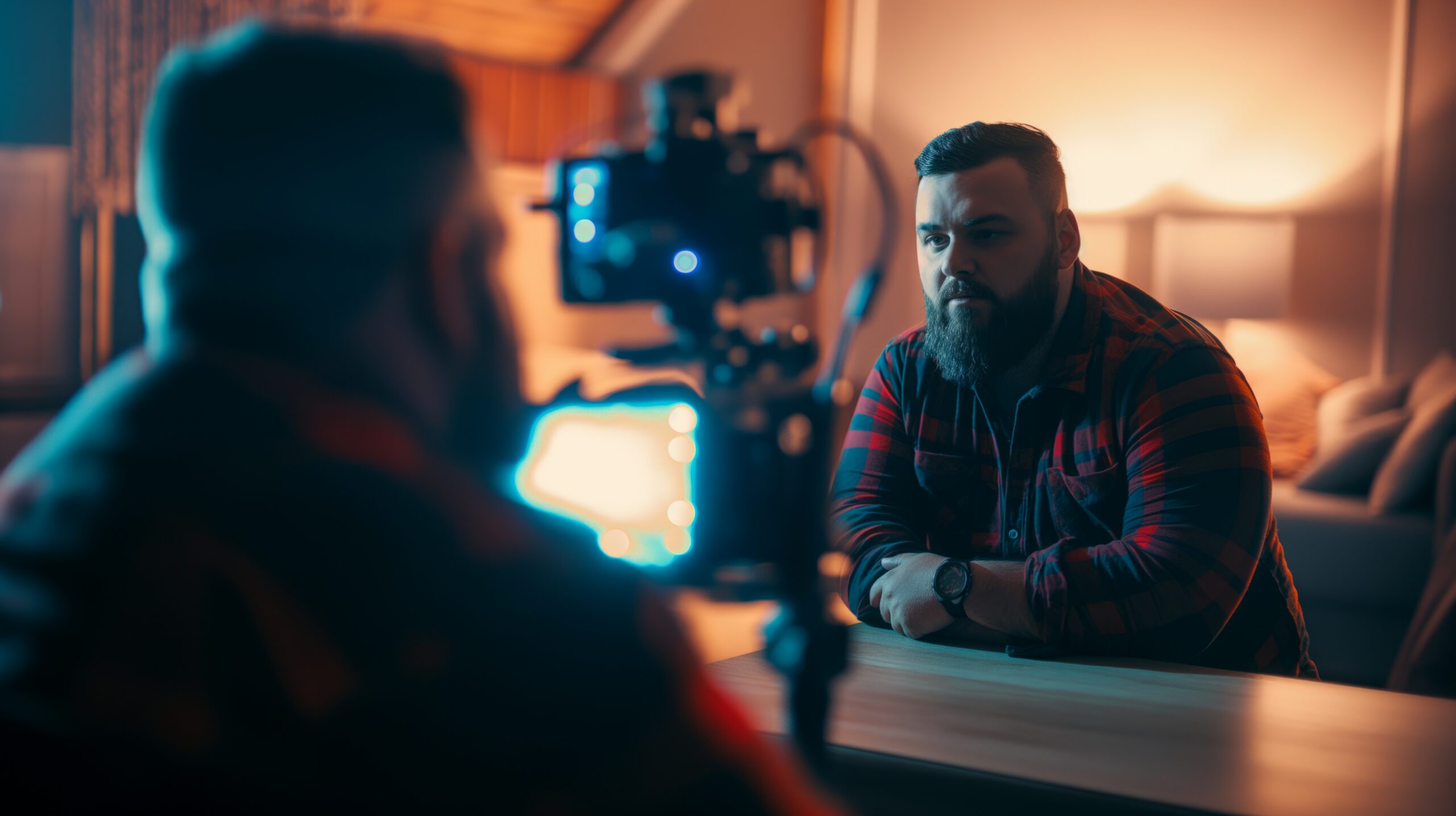
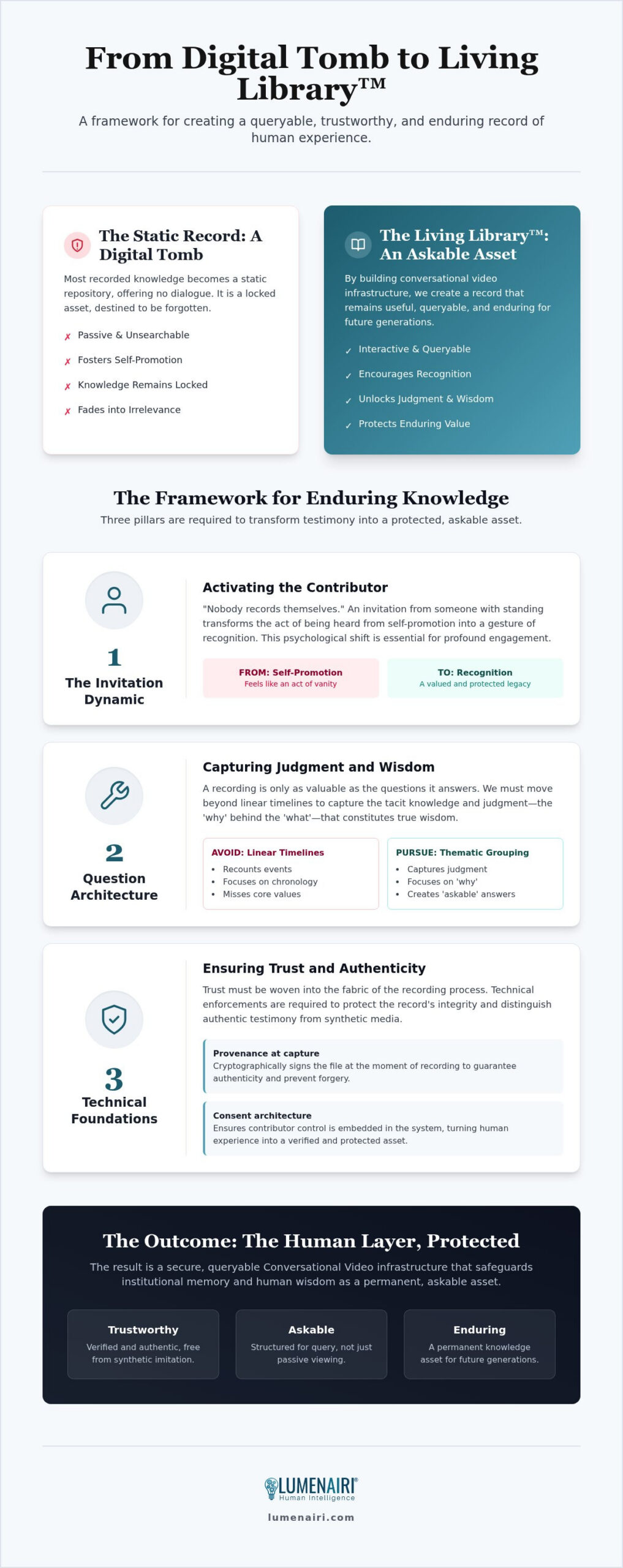
A video file is a poor substitute for a legacy. It’s a digital tomb. Most organisations believe that pressing record on a camera preserves wisdom, yet they often fail to implement interactive video for knowledge transfer. Without the ability to engage with that record, the knowledge remains locked and eventually forgotten. It’s a static repository that offers no dialogue.
You recognise the anxiety of watching institutional memory vanish as senior leaders retire. You’ve seen interviews that feel like self-promotion instead of a meaningful transfer of judgment. This article demonstrates how to create a queryable, trustworthy record of human experience. By adopting these methods, we can build a Living Library™ that remains useful, askable, and enduring for future generations. I will outline a framework for The invitation dynamic and the Conversational video infrastructure required to protect The Human Layer. We’ll examine how to turn a recording into a sacred asset that ensures the contributor is truly heard.
Key Takeaways
- Recognise how the invitation dynamic transforms the act of being heard from perceived self-promotion into a meaningful gesture of professional recognition.
- Move beyond static, unsearchable files by adopting interactive video for knowledge transfer to create a record that remains queryable for future generations.
- Learn to structure question architecture around meaning and judgment rather than simple chronologies to ensure answers are truly askable.
- Establish a foundation of trust through provenance at capture and consent architecture to turn human experience into a verified and protected asset.
The Psychology of the Invitation: Activating the Contributor
Nobody records themselves. To sit before a camera and speak of one’s own achievements often feels like an act of vanity rather than a contribution. This psychological barrier is why most repositories of institutional memory remain empty. We must understand the invitation dynamic. When a person is invited to speak by someone with standing, the act is transformed. It’s no longer self-promotion. It’s recognition. This shift is essential for any programme using interactive video for knowledge transfer to succeed.
Moving from Self-Promotion to Recognition
A formal request signals that an individual’s experience is a sacred asset. For senior leaders or elders, this invitation validates their tenure. It frames their testimony as a legacy for the future. This methodology draws from the established rigour of Oral history, where the interviewer acts as a guardian of the narrative. When people recognise their wisdom is being protected, their behaviour shifts from hesitation to profound engagement. They’re no longer just talking. They’re being heard. It creates a sense of responsibility toward those who will follow.
The Role of the Organisational Trigger
Knowledge capture requires a specific catalyst to overcome inertia. Without urgency, the most valuable insights are lost to time. Organisational triggers, such as leadership succession, mergers, or significant anniversaries, provide the necessary momentum. These moments justify the deployment of enterprise learning programmes. By pairing emotional legacy with operational necessity, we activate the contributor and demonstrate the power of interactive video for knowledge transfer. The interviewer serves as the primary activator. They ensure the record is not just a file, but a queryable resource that respects the weight of experience. This process allows the organisation to protect the value of its Human Layer before it departs.
Question Architecture: Capturing Judgment and Wisdom
A recording is only as valuable as the questions it answers. Most traditional archives fail because they treat a career or a life as a mere list of dates. We require a more sophisticated approach. By implementing interactive video for knowledge transfer, we move beyond the surface. We must target the tacit knowledge. This is the intuition and judgment that never makes it into a corporate manual. It’s about capturing the essence of the contributor’s decision-making process.
The Failure of the Linear Timeline
Chronological interviews often miss the core of a person’s contribution. They recount events but ignore the underlying values that drove those actions. To capture true wisdom, we should group questions by theme: leadership, moments of adversity, and cultural evolution. This methodology, often detailed in a Step-by-Step Guide to Oral History, ensures we record the ‘why’ behind the ‘what.’ It transforms a simple video into a record of judgment. Interactive video for knowledge transfer ensures these insights aren’t buried in a timeline but remain ready for the next generation.
Designing for Conversational Video
Answers must be structured to stand alone. In a Living Library™, a response must be askable. This means the contributor should provide context within their answer, allowing it to remain coherent when accessed as a single fragment. As an interviewer, you must listen for the empathy effect. This is the moment where the contributor’s tone carries the weight of their experience. It’s the difference between data and testimony. For those seeking to preserve these insights at scale, exploring enterprise learning and development solutions can provide the necessary framework for this activation.
Technical Foundations: Trust, Provenance, and Consent
Trust is not a feature we can retrofit. It must be woven into the very fabric of the recording process. If a record lacks a verifiable origin, it cannot serve as a reliable knowledge asset. We achieve this through Provenance at capture. This technical enforcement cryptographically signs the file at the moment of recording. It ensures that what is heard is authentic evidence of a human life. It is never a synthetic imitation. In the context of interactive video for knowledge transfer, this foundation allows future generations to rely on the wisdom they encounter. It provides a record that remains useful, askable, and enduring.
Authenticity in the Age of Synthetic Media
We must distinguish Conversational video from the growing tide of AI-generated avatars. While synthetic media can mimic a voice, it cannot replicate the soul of testimony. By using cryptographic signing at the point of origin, we prevent forgery. This protects The Human Layer from being diluted by generated media. It ensures that the record remains a sacred, untampered asset. It carries the weight of genuine experience. Nothing is generated. Everything is recorded evidence. This approach ensures that interactive video for knowledge transfer remains a trustworthy exercise in long-term memory.
Enforceable Consent and the Right to Withdraw
True participation requires Consent architecture. Permissions should not be buried in a legal document. They must be attached to the recording itself. We use a comprehension test to ensure the contributor understands their rights. If they cannot explain the consent in a single sentence, the process has failed. Contributors must retain the right to revoke their archive licence at any time. This shifts the model from corporate ownership to Custody. The organisation acts as a prestigious guardian of the story instead of its owner. To implement these rigorous standards, organisations should look to Museums & Archives Solutions that prioritise technical trust and human dignity.
The Living Library™: Turning Testimony into Knowledge
The Living Library™ is the final, queryable destination for recorded wisdom. It is not a passive archive. It is a dynamic environment where the past remains present. Through interactive video for knowledge transfer, a viewer can engage with a contributor long after the recording session has ended. This capability ensures that the record remains a living asset rather than a silent file. It allows for a dialogue across time. It ensures the person is truly being heard by future generations.
Searchability by Meaning, Not Metadata
Traditional keyword search often fails because it strips the context from the speaker. It provides text but loses the face and the voice. We focus on meaning-based retrieval instead. This allows a user to ask a complex question and receive a specific, relevant response directly from the contributor. The Lumenairi App captures these moments with technical rigour, while Lumenairi Core curates them into a searchable, interactive whole. This infrastructure ensures that the record is preserved and made truly askable.
Preserving the Human Layer as an Asset
Capturing what people actually say is the only way to preserve the Human Layer, which is why we built the conversational video infrastructure of Lumenairi. This substrate of organisational value is often ignored until it is lost. The ISO 30414:2025 standard now recognises human capital as a strategic, value-creating asset. We must treat personal testimony with the same level of investment and reverence. Using interactive video for knowledge transfer allows us to measure and protect the collective memory of an organisation. The interviewer carries a profound responsibility to protect this wisdom for those who have not yet been born. This is the essence of Founder Heritage. It is a commitment to the future that begins with a single, meaningful invitation.
Securing the Human Layer for the Future
Static video is a digital tomb. It lacks the vitality required to bridge generations. We’ve explored how the invitation dynamic activates contributors and how meaning-based question architecture makes wisdom askable. By implementing interactive video for knowledge transfer, we ensure that institutional memory remains protected and useful. This process relies on technical enforcements like provenance at capture to provide cryptographic proof of authenticity.
I’ve spent thirty years working with testimony and memory. I know that trust cannot be retrofitted. It must be established at the moment of capture. Our infrastructure is trusted by museums, archives, and global enterprises to safeguard the most valuable substrate of any organisation. You have the opportunity to transform fleeting experience into a permanent, queryable asset. We invite you to document your professional legacy with Lumenairi Founder Heritage. Your wisdom deserves a destination that remains askable for all who follow.
Frequently Asked Questions
What are the best life story interview questions for a retiring founder?
The most effective questions for a retiring founder focus on judgement and values rather than simple chronologies. You should ask about moments of adversity where the path forward was not clear, ensuring the record remains askable. This approach transforms the session into a powerful tool for interactive video for knowledge transfer that preserves the essence of their leadership.
How do I convince a senior leader to record their life story?
You can activate a senior leader by applying the invitation dynamic, which is the observation that people agree to be recorded when someone with organisational standing asks them. Frame the interview as a vital way to protect the Human Layer of the organisation by turning self-promotion into recognition. When leaders see their experience as a sacred asset, they are more likely to participate in the programme.
What is the difference between a video interview and conversational video?
Conversational video is a format in which a person is recorded once answering the questions they are most likely to be asked, and viewers then ask their own questions in natural language and receive the recorded answer in that person’s own voice and face. Nothing is generated. Unlike a standard video interview, this infrastructure creates a queryable Living Library™ that allows for a continuous dialogue across time.
How do I ensure the authenticity of a recorded life story in the future?
Authenticity is secured through provenance at capture, which is cryptographic proof of authenticity applied at the moment of recording. This ensures the record is a verified account of what a person actually said, rather than a synthetic imitation. By establishing this technical foundation during the interview, you create a trustworthy asset that remains useful for future generations within your Living Library™.
Can a contributor withdraw their consent after an interview is recorded?
Every contributor retains a permanent right to withdraw their archive licence at any time. Our consent architecture ensures permissions are attached to the recording itself and are revocable by the individual, treating the record as a matter of custody. If a person chooses to withdraw, access is removed immediately, ensuring their participation remains a respected act of being heard.