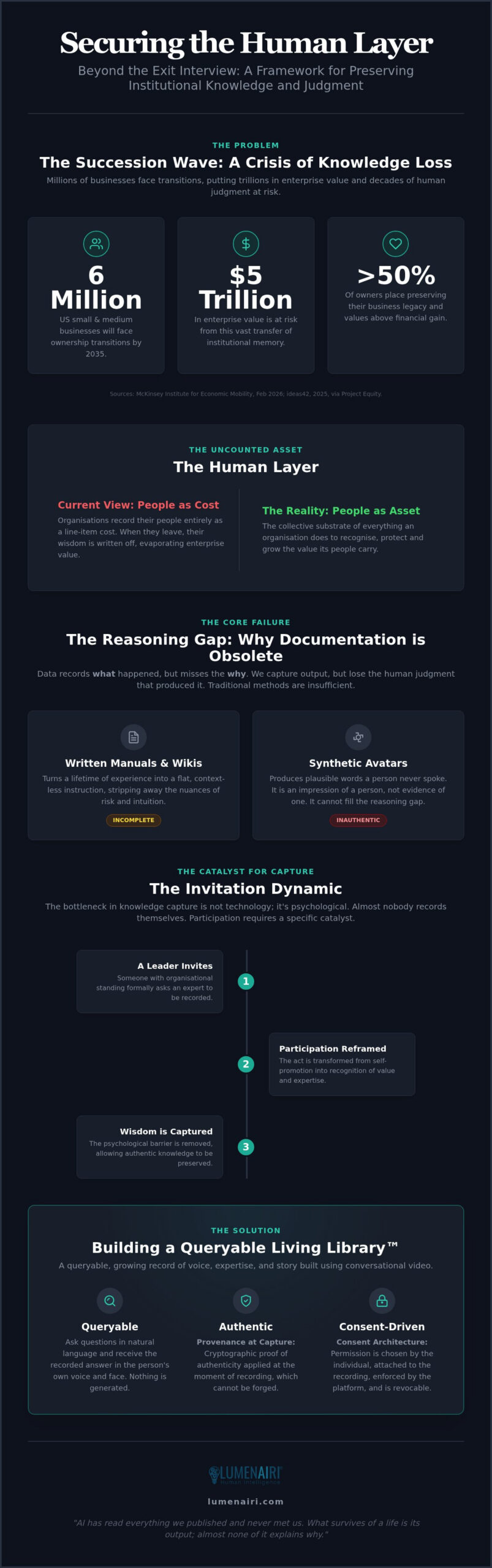
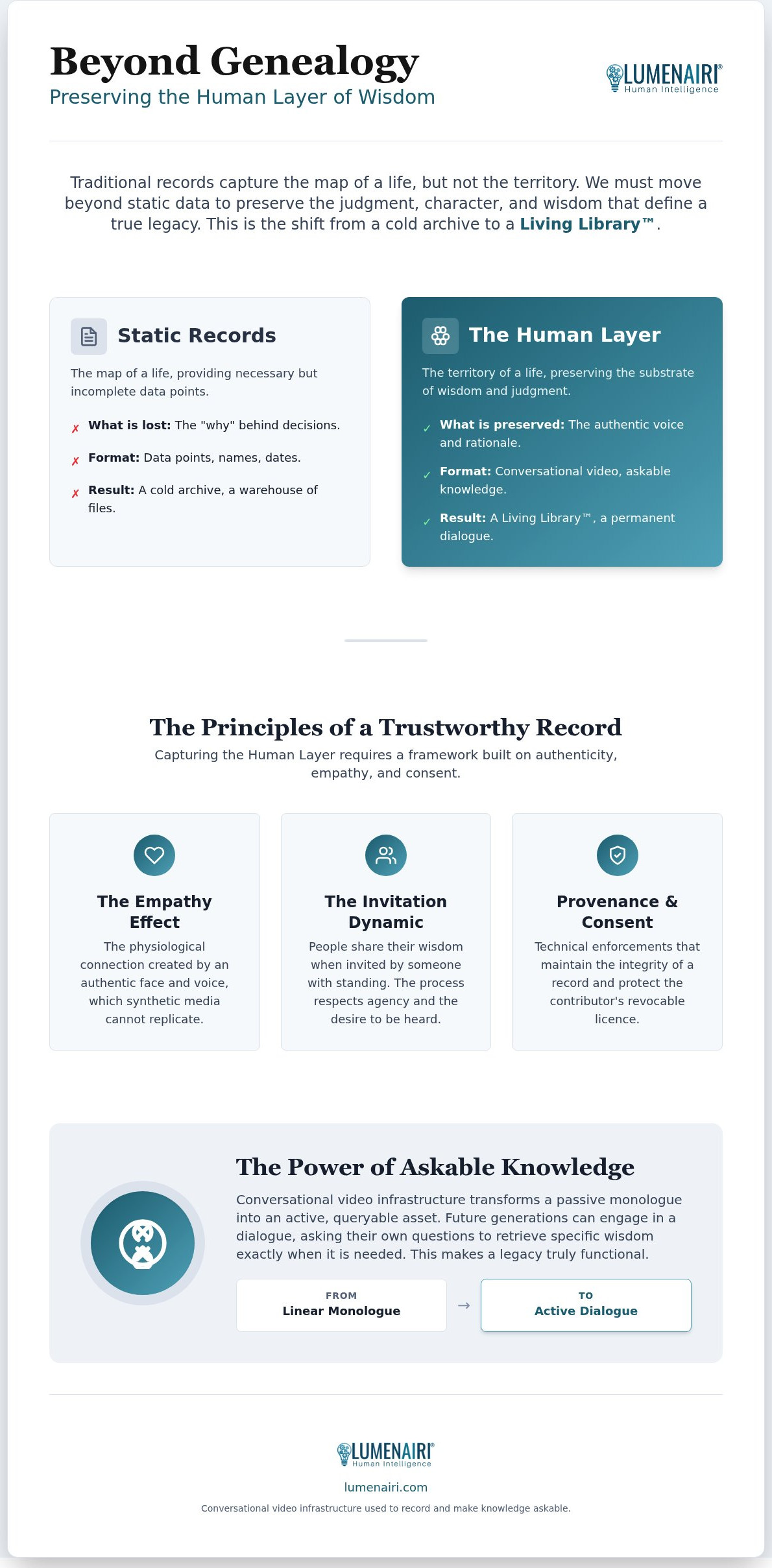
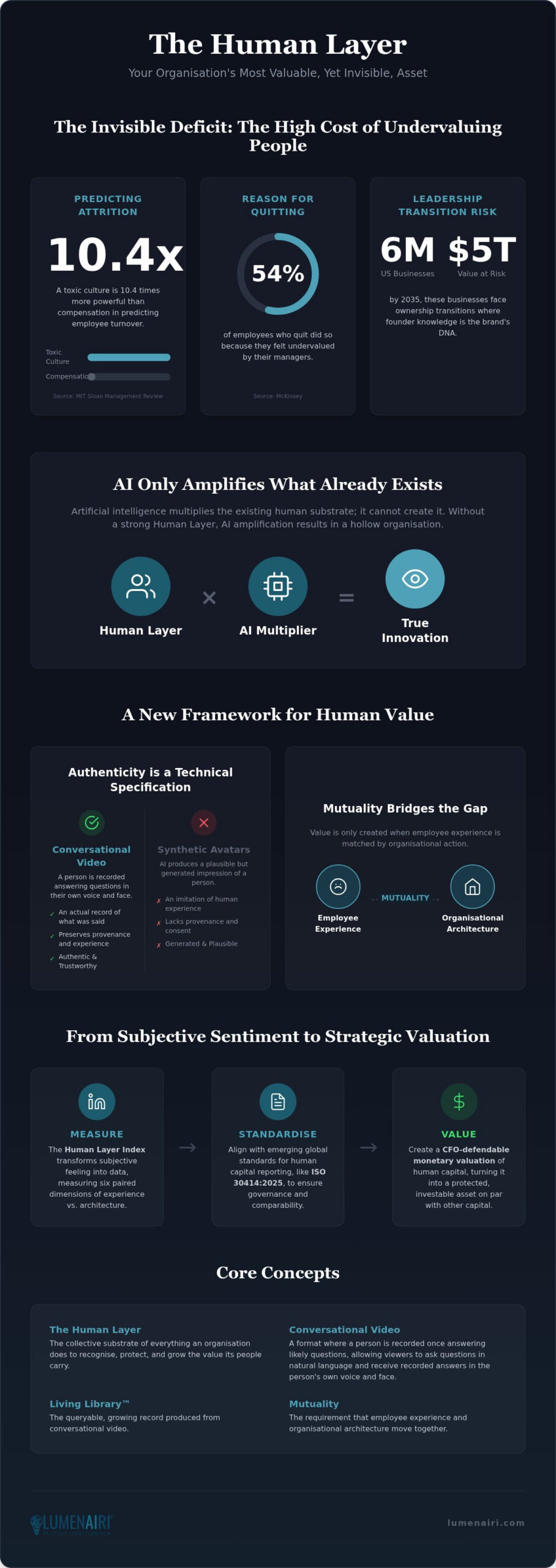
An organisation can document a retiring employee’s procedures and still lose the judgement that made them work. Preserving the knowledge of retiring employees means capturing how they assess unfamiliar situations, not simply listing what they do.
Most organisations recognise the value of a careful handover. Yet documents often cannot answer the questions future colleagues will have. And an invitation to record experience can feel like an administrative task or a request to promote oneself. Participation is as much a challenge as process.
Knowledge-capture efforts are more likely to begin when someone with organisational standing makes the invitation and the purpose is clear. Pairing personal meaning with operational value gives the programme a reason to start and continue. Permission must also travel with each recording and remain under the contributor’s control.
The aim is a record colleagues can return to and question after the employee has left. That takes preparation before the handover begins.
Key Takeaways
- Start preserving the knowledge of retiring employees before the final handover, while there is time to capture the judgement behind their decisions.
- Treat participation as its own challenge. An invitation from someone with organisational standing can make recording feel like recognition.
- Use a succession, anniversary or grant window to create urgency, then pair the employee’s sense of contribution with a clear organisational purpose.
- Plan for future colleagues to ask questions of the record, and ensure permission is attached to each recording, enforceable and revocable by its contributor.
Preserving retiring employees’ knowledge cannot be left to the final handover
Future colleagues may face a consequential decision without access to the judgement that once guided it. Preserving the knowledge of retiring employees must begin before the final handover, while there is time to explore how experience shapes decisions.
An exit process usually serves immediate administrative needs. Responsibilities are reassigned, records are returned and open tasks are listed. Intentional knowledge capture has a different purpose: it asks what colleagues will need to understand when the employee is no longer available to explain the history behind a choice. Knowledge management includes ways of identifying and sharing organisational knowledge. Retirement makes the need to carry that knowledge forward especially visible.
A handover records tasks more readily than judgement
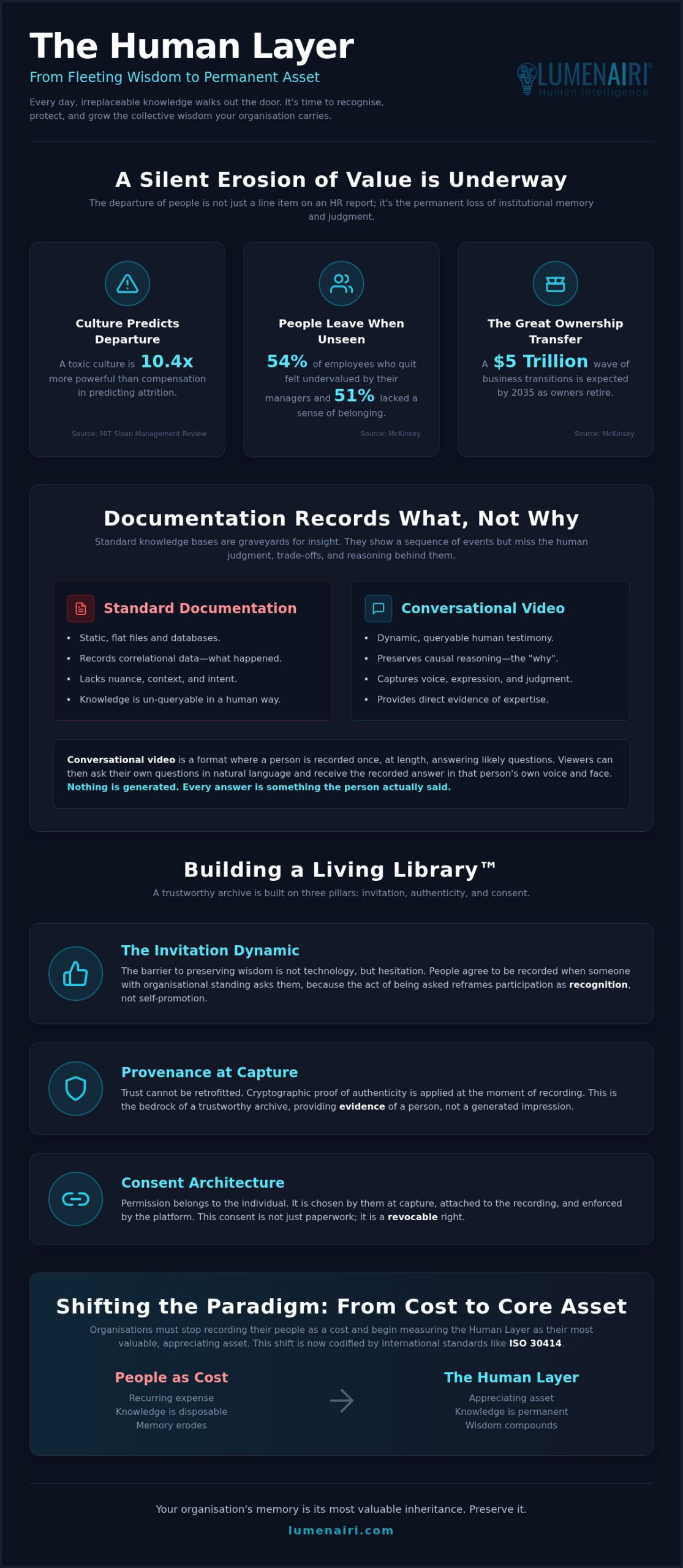
A procedure can explain what to do under expected conditions. It rarely captures why one exception matters, which warning signs deserve attention or how competing priorities should be weighed. A maintenance planner, for example, might document an inspection schedule. A successor may still need to know why one fault calls for immediate action while a similar one can wait. Unless someone deliberately draws out that distinction, it leaves with the person who knows it.
Retirement makes an existing knowledge gap visible
A departure can expose a gap that was already there. Colleagues may have relied on quick explanations, informal checks or an employee’s instinctive review without recognising how much depended on access to that person. When they leave, the questions remain, but the source of the answers is gone.
That is why preserving experience should connect with enterprise learning and development, including how new employees are onboarded. When retained experience informs learning, newcomers can inherit context alongside procedures. Knowledge worth carrying forward needs attention before a departure turns everyday dependence into an organisational blind spot.
The central barrier to preserving retiring employees’ knowledge is activation
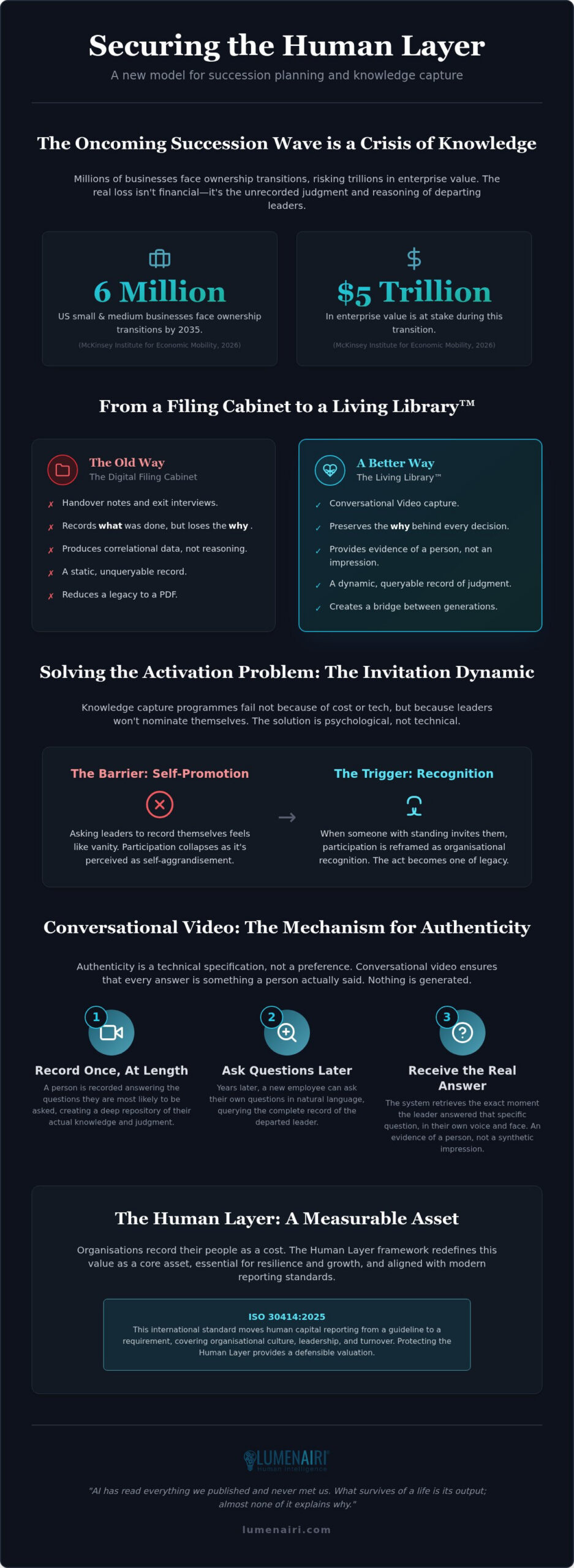
Preserving the knowledge of retiring employees begins with getting people to take part. Activation is the problem of getting people recorded at all, distinct from recording, storing or searching. An organisation can prepare every system and still have nothing to preserve if nobody accepts the invitation.
An invitation changes the meaning of participation
The invitation dynamic is the observation that people agree to be recorded when someone with organisational standing asks them, because being asked reframes participation as recognition rather than self-promotion. Where no such authority exists, participation collapses.
Asking an employee to nominate themselves can feel like asking them to declare their own importance. A request from a respected leader or colleague changes the meaning. It signals that the organisation recognises the employee’s contribution and believes their perspective matters to those who will follow. The invitation should explain the purpose and leave the employee free to decide. Technology can support recording; it cannot create that recognition by itself.
Two-layer value gives a programme a reason to begin and continue
Two-layer value pairs emotional motivation with operational justification. The emotional layer is the opportunity to be heard and contribute an account of work that mattered. The operational layer connects that account to a real organisational need, such as onboarding, training or preserving expertise colleagues will rely on.
Either layer alone is fragile. An administrative request gives little reason to participate. A legacy appeal without a practical purpose may struggle to hold organisational attention. Together, the two layers recognise the employee’s contribution and show colleagues why the record deserves care.
Activation also needs an occasion that gives the organisation a reason to act. A succession, anniversary or grant window can focus attention and support budgeting for a programme. The invitation should come from someone with standing, explain why this person’s experience matters and connect their contribution to a clear future use. For organisations considering how recorded expertise could support enterprise learning and development, that connection can make the request more meaningful and the programme easier to sustain.
Trusted knowledge capture requires a trigger, permission and authentic records
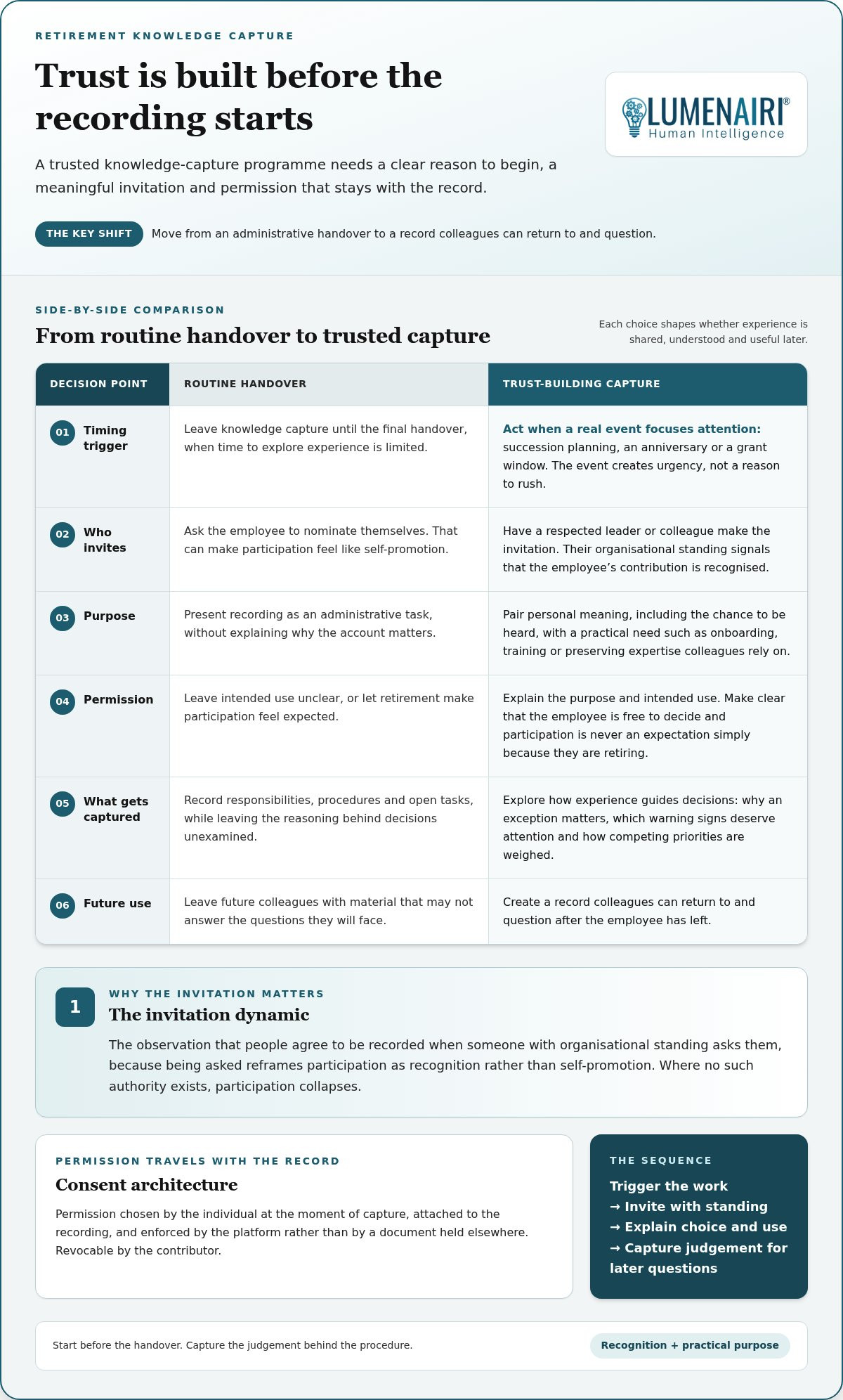
Leaders can build trust in a knowledge-capture programme by identifying a trigger, appointing an inviter, inviting participation and capturing the account with permission. Each step matters. Without willing participation, there is no testimony. Without clear consent, there is no sound basis for use.
A trigger gives leaders a reason to act now
A real organisational event can bring a diffuse concern into focus. Succession planning may reveal that a role depends on one person’s judgement. An anniversary may prompt reflection on how the organisation’s work has evolved. A grant window may create an opportunity to plan a programme and direct attention towards it. The event creates urgency, not a reason to rush. Leaders can use it to define what knowledge matters, who should invite the contributor and how the record may serve future colleagues.
Choose the inviter carefully. The request should come from someone whose standing makes clear that the employee’s contribution is recognised. It should explain the purpose, intended use and the employee’s choice. Participation should never be presented as an expectation simply because someone is retiring.
Authenticity and consent belong in the capture design
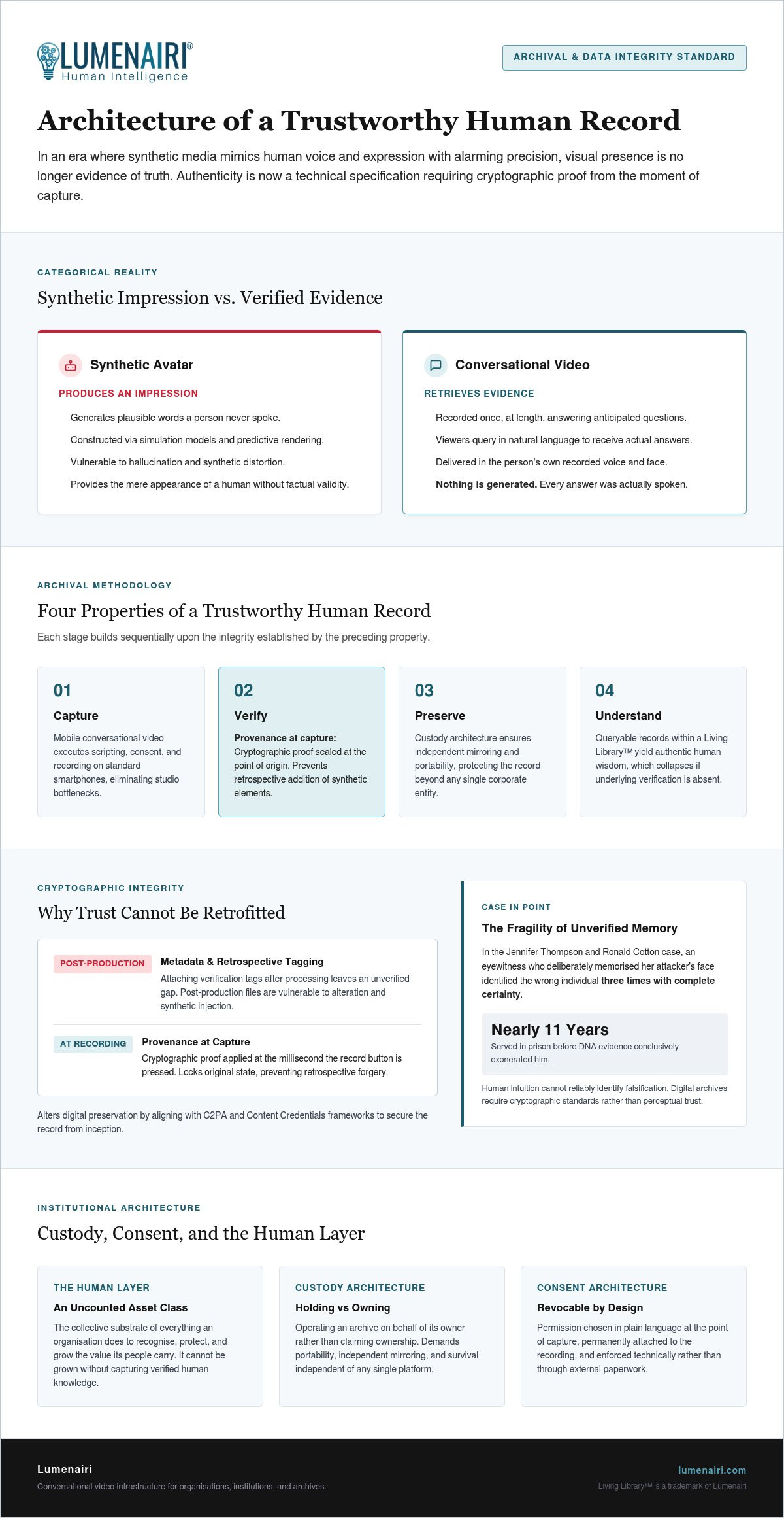
A trustworthy oral history framework begins with preserving what a person actually said. Generated material is not acceptable for an archive, whatever its production quality. A genuine account shows what the person believed and experienced; it does not prove that every statement is objectively true.
Consent architecture is permission chosen by the individual at the moment of capture, attached to the recording, and enforced by the platform rather than by a document held elsewhere. It is revocable by the contributor. Permission must be explicit and explained in plain language. It cannot be treated as a default or broadened later by the organisation.
When an organisation is ready to shape a knowledge-capture programme around workforce learning, explore Lumenairi’s enterprise learning and development approach.
Recorded answers remain useful when future colleagues can question them
A record earns its place when it can meet a future need. Preserving the knowledge of retiring employees means making their experience available to colleagues with questions no handover could anticipate. Searchable documents help people find what was written. A question put to a recorded account can reach what the employee actually said.
Future retrieval depends on what the person actually said
Conversational video is a format in which a person is recorded once, at length, answering the questions they are most likely to be asked, and viewers then ask their own questions in natural language and receive the recorded answer in that person’s own voice and face. Nothing is generated. Every answer is something the person actually said.
This distinction sets a boundary. If a future colleague asks about an exception the employee never addressed, the record cannot honestly supply their answer. It can offer the closest recorded response or make clear that the question remains unanswered. The testimony is genuine evidence of what the person believed and experienced, not proof that every statement is objectively true.
The mechanism matters because expertise resides in people. It becomes useful later when colleagues can ask questions and receive the person’s actual answers. That requires a recording made at length and with consent. Lumenairi builds conversational-video infrastructure for organisations to record that knowledge and make it askable.
A knowledge programme should serve people who never become customers
The purpose reaches beyond any platform. It is to help colleagues learn, preserve institutional memory and make informed decisions after an experienced employee has departed. A practical next step is to identify the organisational event that makes the need urgent, then decide who has the standing to invite participation. The employee can then choose whether to contribute and what permission applies to the record.
The conversation ends. The questions continue. A considered record gives future colleagues a way to listen.
Make the next invitation count
Choose one piece of expertise future colleagues will need, then identify who can credibly invite its holder to share it. That gives the programme a human beginning. It recognises what the employee knows rather than treating the recording as another exit task.
Then consider how colleagues will find an answer when new questions arise. Conversational video makes recorded answers askable. Nothing is generated; each answer is something the employee actually said. Its value lies in giving future colleagues access to a genuine account they can assess in context.
Explore how organisations preserve knowledge with Lumenairi and take the next step towards a record future colleagues can question.
Frequently Asked Questions
Is an exit interview enough to preserve a retiring employee’s knowledge?
No. An exit interview can identify decisions or relationships that deserve fuller attention, but colleagues will still need a way to locate relevant answers when circumstances differ. Treat it as a starting point for focused follow-up.
Can an employee withdraw permission after recording?
Yes. The contributor can revoke permission, and the platform must enforce that choice for the specific recording. Explain before participation who may use it and for what purpose, and make clear that the organisation cannot broaden permission on the contributor’s behalf.
What if a later question has no recorded answer?
The record should make the gap clear rather than supply an answer the employee never gave. If the contributor is willing and the knowledge remains relevant, invite a further recording with clear permission and keep it distinct from the earlier account.
Does an authentic recording prove that every statement is factually true?
No. Authenticity shows that the employee gave the recorded answer, not that every recollection or interpretation has been independently verified. Colleagues can assess the account alongside other organisational records, keeping any later verification or qualification distinct from the original answer.
Lumenairi glossary
Conversational video: A format in which a person is recorded once, at length, answering the questions they are most likely to be asked, and viewers then ask their own questions in natural language and receive the recorded answer in that person’s own voice and face. Nothing is generated. Every answer is something the person actually said.
The invitation dynamic: The observation that people agree to be recorded when someone with organisational standing asks them, because being asked reframes participation as recognition rather than self-promotion. Where no such authority exists, participation collapses.
Activation: The problem of getting people recorded at all, distinct from recording, storing, or searching.
Two-layer value: Pairing of emotional motivation with operational justification.
Consent architecture: Permission chosen by the individual at the moment of capture, attached to the recording, and enforced by the platform rather than by a document held elsewhere. Revocable by the contributor.