
Tag: Storytelling

  • Why telling our stories matters for future generations

    Why telling our stories matters for future generations

    What if the most profound inheritance you leave behind isn’t found in a deed or a bank account, but in the specific cadence of your voice and the hard-won wisdom of your lived experience? It’s a question that haunts many of us as we look at dusty boxes of fading photos, silent cassettes, and unlabelled documents. We feel a quiet urgency. We fear the voice and personality of those we love is slipping away. Families struggle with the task of preserving family history for future generations, feeling buried by the sheer volume of unorganized artifacts. You aren’t alone in this desire to protect what’s sacred.

    This article offers a methodical, reverent approach to safeguarding your narrative. We move beyond physical clutter to capture the essence of your ancestors. You’ll discover how to create a curated, permanent digital sanctuary that fosters a deeper emotional connection with those who came before. We will guide you through turning fragile memories into an enduring legacy through cinematic quality, intentional curation, and technological assurance. It’s time to find peace in knowing your story is secure.

    Key Takeaways

    • Embrace your role as a guardian of a Living Library. You’ll learn to treat every elder’s story as a sacred repository of wisdom rather than a simple collection of facts.
    • Apply a narrative filter to your archives. This ensures you’re preserving family history for future generations by focusing on the artifacts that reveal true character and core values.
    • Elevate your oral history interviews. Move past chronological timelines to uncover the deep, philosophical reflections that capture a loved one’s authentic voice.
    • Secure your legacy with digital stewardship. Use the 3-2-1 backup rule to build a resilient archive that remains accessible and protected against the passage of time.

    The Architecture of Memory: Why Preserving Family History is a Sacred Duty

    To engage in the study of family history is to accept a profound responsibility. It isn’t merely about collecting dates or names. It’s the active safeguarding of ancestral wisdom and personal identity. We must view our elders as a Living Library. Every patriarch and matriarch is a repository of unique knowledge. They hold the institutional memory of a lineage. When an elder passes without their story being told, a library burns to the ground. This makes the task of preserving family history for future generations a sacred duty rather than a casual hobby.

    When you take on the role of the Guardian, you become the vital bridge. You connect past silence to future connection. Without this bridge, we risk losing the living essence of our people. Physical artifacts are inherently fragile. A silver watch or a hand-stitched quilt carries little weight if the context has faded. True preservation requires us to capture the “why” behind the “what.” We must move beyond the object to reach the soul of the experience.

    The Cost of Silence

    Memory is delicate. Often, three generations is the limit before a vivid story dissolves into a mere name on a chart. Narrative loss is the disappearance of the “why” behind the “what” in our shared ancestral experience. Without intervention, the vibrant voice of a great-grandparent becomes an echo that eventually vanishes into silence. We lose the philosophy that guided their hands and the resilience that built our present.

    Transcending the Physical

    There’s a vital difference between hoarding old items and curating a legacy. One is a collection of clutter. The other is a sanctuary of meaning. Digital narratives offer a permanence that physical paper cannot match. They ensure that preserving family history for future generations is a dynamic, accessible process. By moving stories into a digital sanctuary, we grant them the endurance they deserve.

    Curating Your Legacy: Determining What to Save for Future Generations

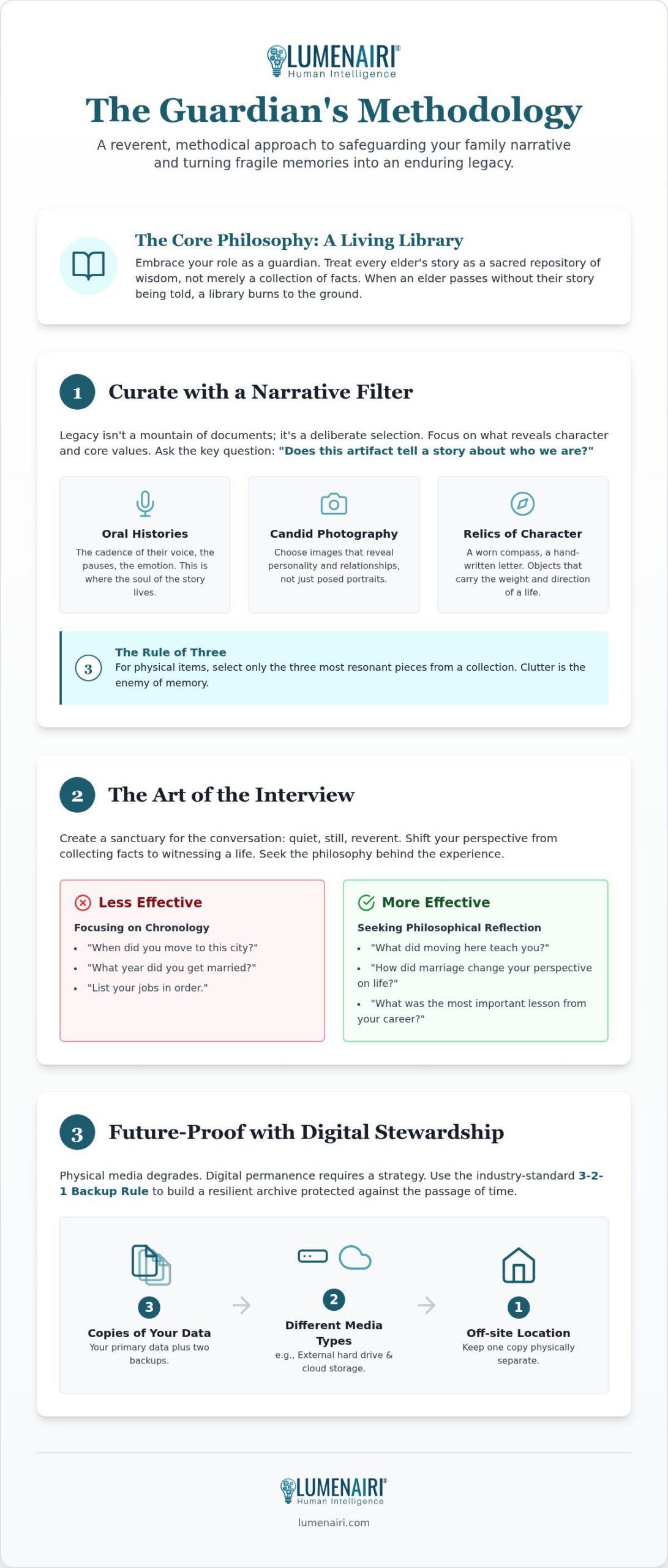
    Legacy isn’t a mountain of documents. It’s a deliberate selection. We must apply a “Narrative Filter” when preserving family history for future generations. Ask: does this object define our family values? If it doesn’t tell a story, it’s just data. To truly Preserve Family Archives, we focus on the three pillars: oral histories, candid photography, and relics of character. A relic of character might be a grandfather’s worn compass. It speaks of his direction. It carries his weight. These items breathe.

    Curation requires discipline. Follow the Rule of Three for physical items. Select only the three most resonant pieces from a collection to avoid overwhelming your heirs. Clutter is the enemy of memory. Metadata is the cure. Record names, dates, and the specific “story behind the photo.” Without this context, a face is just a stranger from the past. Meaning resides in the details.

    The Narrative Filter in Practice

    Choose artifacts that reveal the soul. A business ledger is logistics. A letter home from a difficult journey is personality. When documenting the professional journey of a patriarch, using Founder Heritage frameworks ensures the wisdom of leadership survives. It transforms a career into a lesson for those who follow. It turns success into a roadmap.

    Managing the Digital Transition

    Technology moves fast. VHS tapes and slides are fragile relics. Migrating these to modern, redundant formats is a necessity for preserving family history for future generations. Use clear naming conventions to ensure files remain findable. This digital stewardship keeps the past accessible. If you seek a permanent home for these treasures, consider the Lumenairi Mobile App as your digital sanctuary.
    Why telling our stories matters for future generations

    The Art of the Interview: Capturing Oral Histories

    The room must be a sanctuary. Quiet. Still. Reverent. When we sit across from an elder, we are not merely recording data; we are witnessing a life. This environment serves as the foundation for preserving family history for future generations. It signals that what follows is significant. It honors the speaker. It creates the safety required for vulnerability.

    The Guardian’s Methodology requires a shift in perspective. We move beyond the rigidity of chronological facts. We seek philosophical reflections. Instead of asking for a date, we ask for a meaning. High-quality audio and cinematic framing transform a simple conversation into an enduring heirloom. Use the “Silent Interviewer” technique. Allow for pauses. Let the emotional weight of a memory settle before moving forward. Silence is often where the deepest truth resides.

    Crafting Questions That Resonate

    Move past surface-level inquiries. Instead of “Where were you born?”, ask “What moment defined your understanding of courage?” Wisdom emerges from the struggle. Consider these legacy questions:

    • What is the most important truth you’ve discovered about love?
    • Which of your ancestors’ traits do you see most clearly in yourself?
    • If you could speak to your descendants a century from now, what warning would you give?

    For those who wish to ensure these insights reach a wider audience, the Society of American Archivists offers guidance on donating family records to public institutions.

    Creating a Sanctuary for Storytelling

    Lighting should be soft and intentional. The background must suggest a “portrait of a life” without distracting from the subject’s face. To achieve this level of structured, graceful capture, the Lumenairi Mobile App provides a sophisticated framework for the home historian. It guides you through the process of preserving family history for future generations with ease. If you prefer a truly cinematic standard, explore our professional filming services to honor your family’s most important voices.

    Future-Proofing Your Heritage: Digital Stewardship and the Living Archive

    Digital stewardship is an ongoing commitment to accessibility and security. It is the active labor that prevents a digital archive from becoming a digital graveyard. Without this care, our most precious recordings face the silent threat of technological obsolescence. We must approach the task of preserving family history for future generations with a methodical rigor that matches our reverence. Follow the 3-2-1 backup rule. Keep three copies of your records. Use two different formats. Store one copy off-site in a secure cloud environment. This creates a Living Archive. It is a collection meant to be viewed, shared, and celebrated, rather than hidden in a closet.

    Professional documentation serves as the ultimate insurance against the erosion of time. It anchors the narrative. It provides the clarity that fragmented snapshots cannot offer on their own.

    From Data to Legacy

    Specialized platforms like Lumenairi Core provide a digital sanctuary for family wisdom. In an era of public social media, privacy and controlled access are paramount. Your family’s private reflections deserve a space that is secure and intentional. This ensures the collective memory remains an exclusive treasure for your descendants. It transforms raw data into an enduring legacy that survives the shifting tides of software and hardware.

    The Professional Standard

    For high-stakes legacy projects, enlisting professional filming services is the gold standard. A cinematic biography acts as a centerpiece for multi-generational learning. It offers a window into the past that is both immediate and timeless. When you choose professional capture, you invest in the permanence of your family’s voice. You ensure that the wisdom of the past remains a living force for the future, successfully preserving family history for future generations in its most potent and cinematic form.

    Securing Your Place in the Living Library

    The artifacts of our lives remain silent without the breath of our stories. We’ve explored how moving beyond physical hoarding allows us to curate a legacy of true character. We’ve learned that the art of the interview requires a sanctuary of quiet and a focus on philosophical wisdom rather than mere dates. Most importantly, we’ve established that preserving family history for future generations is a sacred duty that requires diligent digital stewardship. It isn’t enough to record. We must protect and share.

    Lumenairi is rooted in world-class conversational video technology. It offers cinematic-quality documentation that transforms memories into a living force. You don’t have to navigate this journey alone. If you desire to anchor your family’s narrative against the fog of memory, then a dedicated sanctuary is the only path to permanence. You can secure your family’s legacy with the Lumenairi Mobile App. This private sanctuary ensures your most precious wisdom is never lost to the erosion of time. Your voice is a gift. It’s time to ensure it’s heard by those who haven’t yet been born.

    Frequently Asked Questions

    What is the best way to start preserving family history if I’m overwhelmed?

    Focus on one person and one story at a time to avoid the paralysis of a vast archive. Identify the eldest member of your family and begin with a single, focused session. You don’t need to organize every photo immediately. Instead, prioritize the living voice. By starting small, you ensure that the task of preserving family history for future generations feels manageable and sacred rather than burdensome.

    How do I interview a relative who is reluctant to talk about the past?

    Shift the focus from a formal interview to a collaborative reflection. Bring a “relic of character,” such as an old tool or a cherished photograph, to serve as a catalyst for memory. Ask about the feelings associated with the object rather than seeking specific dates. When you treat the conversation as a shared exploration of wisdom, the subject often feels honored rather than interrogated, allowing their authentic voice to emerge naturally.

    What digital file formats are most likely to last for 50 or 100 years?

    Choose non-proprietary, open-source formats that are widely adopted by global archives. For documents, PDF/A is the standard for long-term preservation. High-resolution TIFF files are preferred for photography, while uncompressed WAV files protect audio integrity. For video, H.264 or H.265 within an MP4 container offers a balance of quality and compatibility. These formats are designed to survive software shifts and ensure your digital legacy remains accessible for decades.

    How can I involve younger generations in preserving our family heritage?

    Invite younger family members to serve as the technological bridge for the project. Assign them specific roles, such as managing the digital sanctuary or assisting with the cinematic setup for oral histories. This participation fosters a sense of stewardship and responsibility toward their own ancestry. When they act as the “Guardians” of the technology, they develop a deeper emotional connection to the stories they are helping to protect and transmit.

    Is it better to use a dedicated app or just save files to a cloud drive?

    Cloud drives are merely storage repositories, while a dedicated app serves as a digital sanctuary. A platform like the Lumenairi Mobile App provides the structure, prompts, and cinematic frameworks necessary for true storytelling. It moves beyond raw data to curate a Living Library of wisdom. While cloud storage is a vital part of the 3-2-1 backup rule, a specialized tool ensures that the human element remains at the center of the archive.
  • Record Your Parents’ Life Story: A Guide to Legacy

    Record Your Parents’ Life Story: A Guide to Legacy

    What if the most valuable inheritance your family possesses isn’t a physical heirloom, but the specific cadence of your mother’s voice or the hard-won wisdom in your father’s eyes? Most of us carry a silent fear that these stories will eventually fade into a quiet distance. You feel the urgency. The weight of time. When you consider how to record your parents’ life story, the technical complexity and the perceived awkwardness of starting such a deep conversation often keep the recorder silent.

    It’s time to bridge that gap. This guide offers a professional methodology to ensure their essence remains an active part of your family’s future. You’ll discover how to move past technological overwhelm and the uncertainty of which questions to ask. We’ll show you how to build a structured archive, use the Lumenairi Mobile App for digital preservation, or employ Professional Filming Services to create a cinematic legacy that transforms personal memory into a sacred ancestral asset. Your history deserves to endure.

    Key Takeaways

    • Reframe the conversation as a “Legacy Invitation” that honors your parents’ experiences as an essential map for future generations.
    • Master the technical nuances of how to record your parents’ life story with cinematic quality using the Lumenairi Mobile App.
    • Implement the Life Cycle framework to move beyond simple facts; capture the profound wisdom and humanity found in life’s greatest transitions.
    • Transition from mere digital files to a “digital sanctuary” by organizing family stories into a structured archive that lasts for centuries.

    The Invitation: How to Initiate the Legacy Conversation

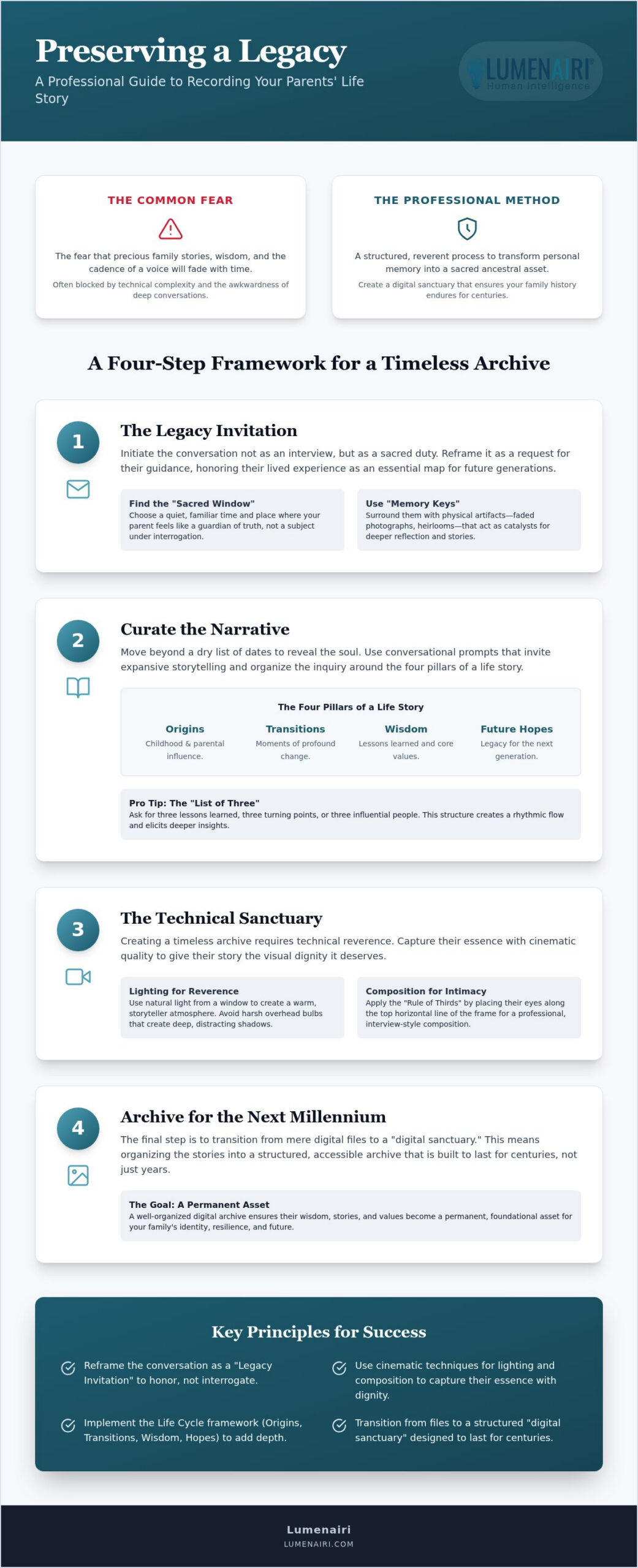
    The act of beginning is often the most daunting hurdle. You aren’t simply asking for a timeline of dates; you’re extending a “Legacy Invitation.” This is a request for guidance. It’s a recognition that their lived experience holds the map for those who follow. A Legacy Invitation is a bridge between ancestral wisdom and future resilience. When you approach the question of how to record your parents’ life story, frame it as a sacred duty. You’re the prestigious guardian of their truth.

    Reframing the Narrative

    Many parents hesitate. They claim their lives were ordinary or even boring. Reframe this immediately. Their choices, their endurance, and their values are the foundation of your family’s identity. Understanding how to record your parents’ life story requires shifting the gaze from mere facts to the values that sustained them. This process is deeply rooted in the tradition of Oral history. Here, the focus moves from cold data to the emotional resonance of a life well-lived. By documenting these reflections, you ensure their wisdom becomes a permanent asset.

    Setting the Emotional Stage

    Success depends on finding the “Sacred Window.” This is a time and place where your parent feels like a guardian of truth rather than a subject under interrogation. Choose a quiet, familiar corner of their home. Surround them with “memory keys.” Use physical artifacts like faded photographs or old heirlooms that evoke specific stories. These objects act as catalysts for deeper reflection. Your role is to listen with quiet confidence. Allow space for their essence to emerge naturally. It’s a methodical process that honors the weight of their experience.

    Curating the Narrative: Selecting Questions that Capture Essence

    Capturing a life isn’t about a dry list of dates. It’s about revealing the soul. When you consider how to record your parents’ life story, you must move beyond simple “yes” or “no” answers. Use “Conversational Video” prompts that invite expansive storytelling. A powerful method is the “List of Three” technique. Ask for three lessons they’ve learned, three turning points that defined them, or three people who changed their trajectory. This structure creates a rhythmic flow, turning an interview into a sacred archive where you act as the prestigious guardian of their experience.

    The Four Pillars of a Life Story

    Organize your inquiry into a Life Cycle framework. Start with Origins to capture the “spark” of childhood and parental influence. Move to Transitions, documenting moments of profound change like career shifts, marriage, or loss. Finally, focus on Wisdom and Future Hopes. This extracts the true “Founder Heritage” of your family. What do they know now that they wish they knew then? As you work to Preserve Family Archives, these pillars ensure the recording remains a structured asset. It’s a methodical way to understand how to record your parents’ life story with lasting depth.

    The Art of the Follow-Up

    Silence is a tool. Use it. When a parent finishes a thought, wait. Often, the deepest memories surface in the quiet that follows. Move from event to insight by asking, “How did that change you?” This transforms a memory into a lesson. Navigating sensitive topics requires “Professional Grace” and profound reverence. If a topic feels heavy, acknowledge its weight before proceeding. Treat their vulnerability as a sacred gift. For those seeking a guided experience, the Lumenairi Mobile App provides a structured oral history tool to lead these delicate conversations with quiet confidence.

    Record Your Parents’ Life Story: A Guide to Legacy

    The Technical Sanctuary: Recording with Cinematic Quality

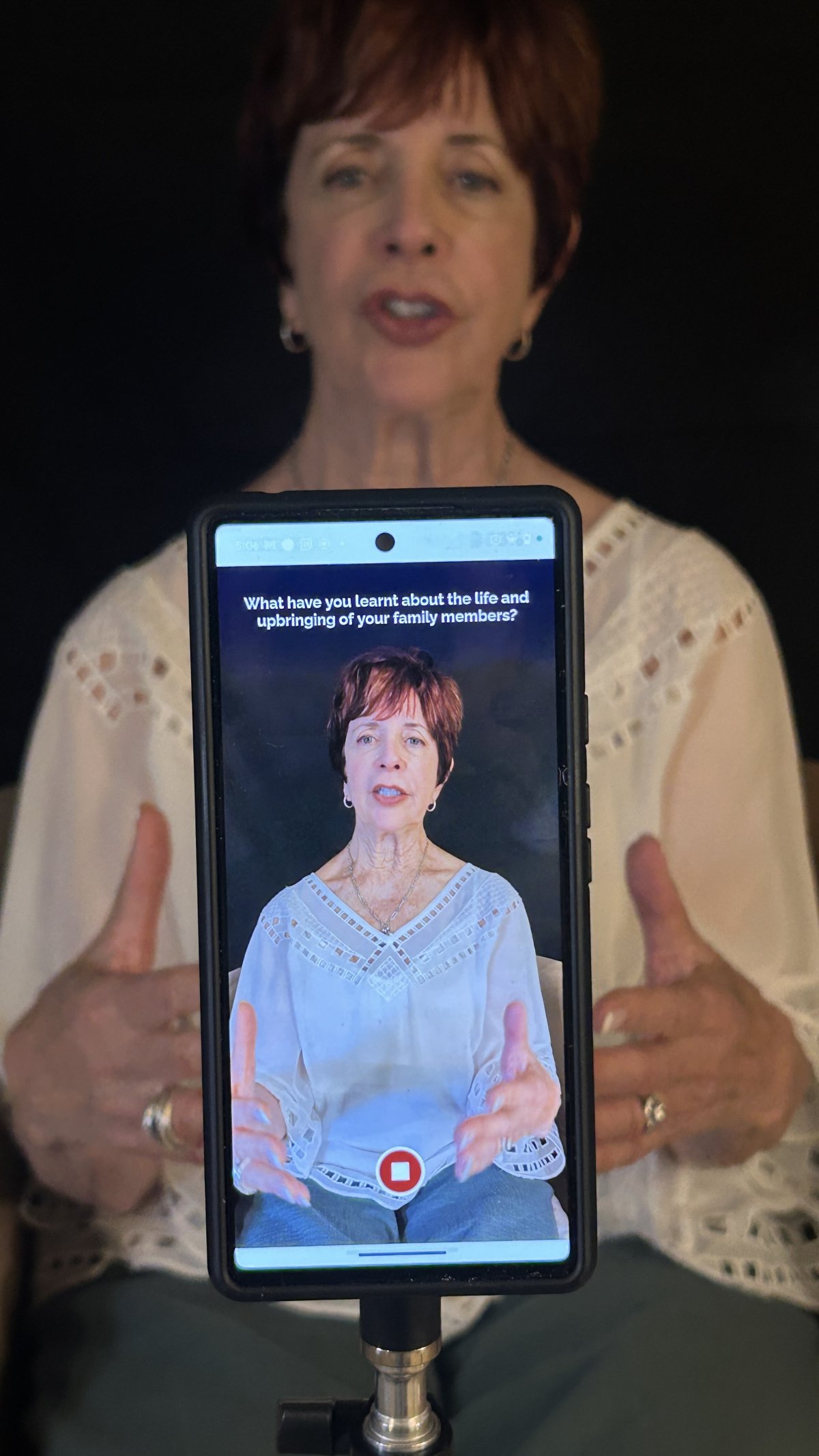
    Creating a digital sanctuary requires more than just pressing record. It’s about technical reverence. When you’re learning how to record your parents’ life story, the goal is to capture their essence with cinematic quality. The Lumenairi Mobile App serves as a structured oral history tool, guiding you through this technical process with quiet confidence. It transforms a standard mobile device into a gateway for ancestral memory, ensuring the final archive feels both timeless and prestigious.

    Lighting and Composition for Reverence

    Visual dignity begins with light. Avoid harsh overhead bulbs that create deep shadows. Instead, use natural light from a large window to create a warm, storyteller atmosphere. Position your parent at a slight angle to the light source to add depth to their features. Apply the Rule of Thirds by placing their eyes along the top horizontal line of the frame. This creates a professional, interview-style composition that feels intimate rather than clinical. It’s a simple step that adds significant weight to the visual narrative.

    Securing the Sound

    Audio clarity is often more important than video resolution for emotional resonance. You must eliminate “Data Noise.” These are the background hums, ticking clocks, or sudden distractions that break the lyrical flow of a story. Use an external microphone if possible to capture the specific nuances and tremors of a parent’s voice. This is what creates the deepest connection for future generations. It’s a methodical way to ensure their wisdom is heard with absolute clarity, preserving the humanity within the recording.

    While mobile tools offer incredible accessibility, some stories demand a grander scale. If you seek a truly high-end, cinematic documentary, consider Professional Filming Services. This option provides the expertise of visionary historians to craft a definitive record of your family’s heritage. Whether you choose a mobile approach or professional production, the objective remains the same: a sanctuary of human wisdom that endures for the next millennium.

    Archiving for the Next Millennium: Beyond the Digital File

    The final recording is not the end. It’s the beginning of a sacred trust. Once you’ve learned how to record your parents’ life story, you must ensure that story survives the shifting tides of technology. A phone gallery is a fragile repository, not a digital sanctuary. It’s prone to loss, corruption, or simple neglect. True preservation requires a Private Family Archive. This is a secure space where memories are treated as sacred assets rather than mere data. Organization is key. Tag your recordings with metadata, categorizing stories by theme, date, and wisdom type. This allows future generations to find specific guidance exactly when they need it most. It turns a vast library of video into a searchable map of human experience.

    Combatting Digital Fragility

    Digital rot is a silent thief. To protect your family’s collective memory, follow the 3-2-1 Rule. Maintain three separate copies of your archive. Use two different formats, such as cloud storage and physical drives. Finally, keep one copy in a dedicated off-site sanctuary. While social media is transient and public, a dedicated heritage platform offers the permanence and privacy your ancestry deserves. It ensures your parents’ voices don’t vanish into a forgotten feed. You’re building for the next century, not the next season.

    The Living Archive

    A legacy shouldn’t be a static file. It’s a multi-generational conversation. By using the Lumenairi Core, you can manage and share this cultural heritage with intentionality. It allows you to create a rhythmic, steady flow of storytelling. You can introduce these lessons to children and grandchildren at the perfect moment. The process of how to record your parents’ life story transforms from a singular task into an enduring family project. You aren’t just saving a file. You’re protecting a soul. It’s a methodical approach to ensuring that wisdom remains alive, accessible, and profoundly impactful for those yet to be born.

    Securing Your Ancestral Future

    The window for capturing a life story is unique and fleeting. By mastering how to record your parents’ life story, you transform a series of memories into a permanent ancestral asset. You’ve learned to invite their wisdom with grace, curate their narrative through the Life Cycle framework, and achieve cinematic quality that honors their dignity. This isn’t just about data. It’s about humanity.

    True preservation requires a transition from temporary files to a secure digital heritage platform. Whether you choose the expert guidance of oral history pioneers or professional filming services, you’re building a bridge for the next millennium. The effort you invest today ensures that your parents’ voices remain a living presence for generations to come. This sacred responsibility yields the greatest of rewards. Your history is waiting to be protected.

    Preserve your family’s wisdom with the Lumenairi Mobile App and start building your digital sanctuary today. We are here to help you honor the stories that define you.

    Frequently Asked Questions

    What are the best questions to ask my parents for a life story recording?

    Focus on open-ended prompts that reveal values and turning points rather than simple dates. Ask about their earliest memories of home, the person who most influenced their character, and the hardest decision they ever made. Using the Life Cycle framework ensures you move past surface-level facts to capture the essence of their humanity. This approach transforms the recording into a true sanctuary of wisdom for your family.

    Do I need professional equipment to record a family oral history?

    You don’t need a professional studio to achieve cinematic quality. Modern mobile devices are capable of capturing stunning detail when paired with natural lighting and an external microphone. The Lumenairi Mobile App provides a specialized oral history tool that guides you through these technical nuances with quiet confidence. If you desire a high-production documentary, you can always choose Professional Filming Services to create a definitive record.

    How do I handle sensitive or painful topics during a legacy interview?

    Approach difficult memories with professional grace and profound reverence. If a parent becomes emotional, offer them the gift of silence and let them decide whether to proceed. Acknowledge the weight of the experience and remind them that their vulnerability serves as a map for future generations. When learning how to record your parents’ life story, treating these moments as sacred assets ensures the process remains supportive.

    How long should a life story recording session be?

    Respect their energy by limiting sessions to 60 or 90 minutes at a time. Recording a life story is an intensive emotional process for both the storyteller and the guardian. It’s often better to conduct multiple shorter interviews than one long, exhausting session. This methodical approach allows memories to settle and new insights to surface between meetings. Patience is a virtue when building a legacy that lasts.

    Where is the safest place to store digital family history files?

    The safest place is a dedicated digital sanctuary that follows the 3-2-1 preservation rule. Avoid relying on social media or a single hard drive, as these are prone to digital rot. Store your files in a secure, cloud-based platform like the Lumenairi Core, which is designed for long-term heritage management. A structured archive provides the security and privacy required to protect your family’s collective memory for the next millennium.