
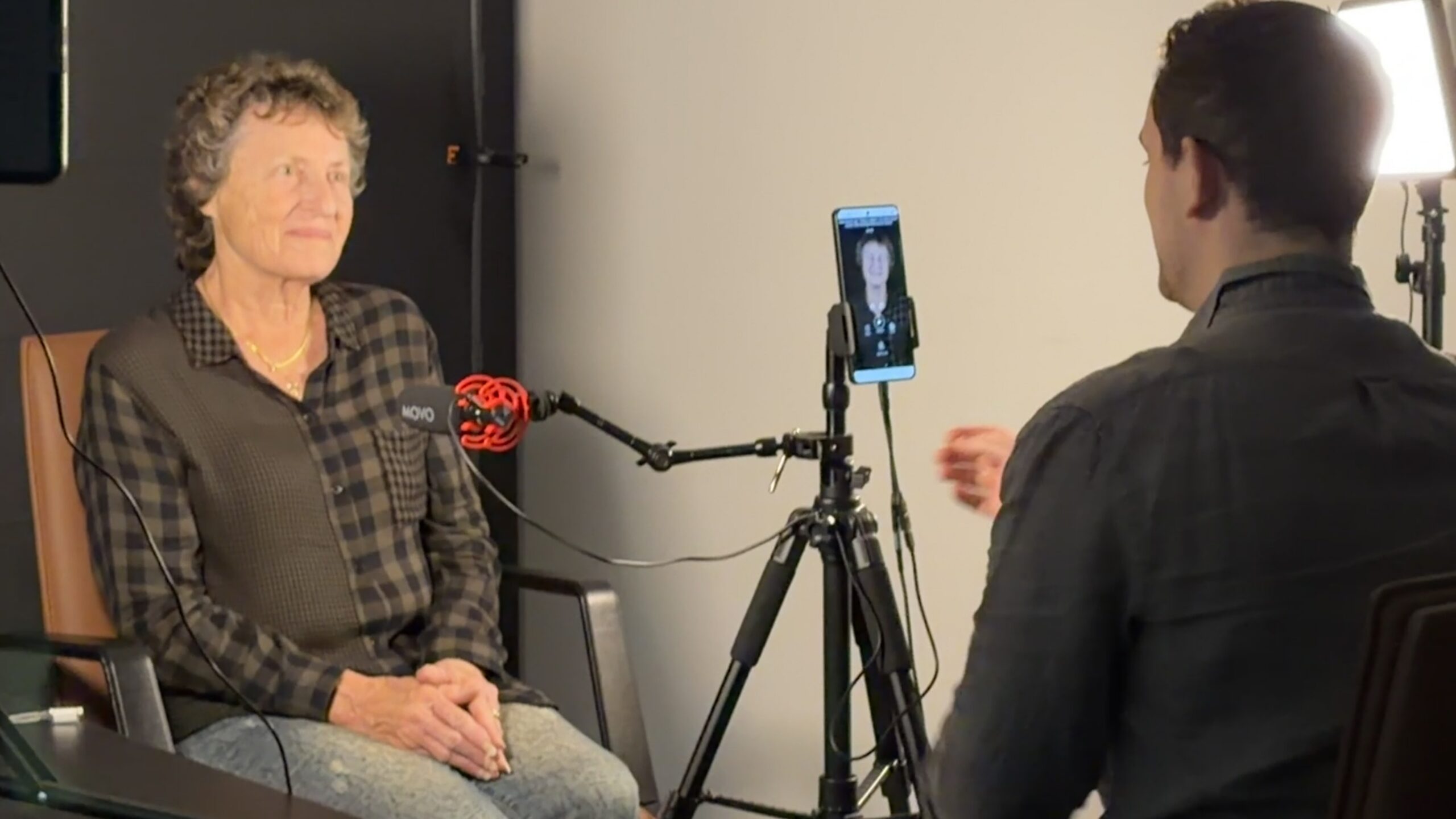
A linear recording is a closed loop that eventually falls silent. While we capture more footage than any generation in history, these files often remain untouched after the first viewing because they cannot speak back to us. We recognise the fear that personal judgment will vanish. We also understand the growing distrust of synthetic media. You require more than a passive archive. You need a way to ensure that wisdom remains accessible and that the voice you hear is genuine.
Conversational video transforms a static recording into a queryable record of experience. By using a Living Library™ and robust conversational video infrastructure, we move beyond mere playback to create an enduring dialogue. This article defines the technology that makes knowledge askable while ensuring that consent architecture remains at the heart of the process. We will explore how provenance at capture protects the integrity of the record and why this shift is essential for the preservation of collective memory.
Key Takeaways
- Recognise why legacy projects often stall and how the invitation dynamic ensures that subjects feel comfortable being heard.
- Learn how Conversational video moves beyond linear recording to provide an interactive, askable record of authentic human experience.
- Secure the integrity of every testimony through provenance at capture to ensure the record remains untampered and verified.
- Understand how to scale individual memory into The Human Layer to protect and grow the collective wisdom of an organisation.
The Activation Problem: Why Family Story Projects Stall Before the First Recording
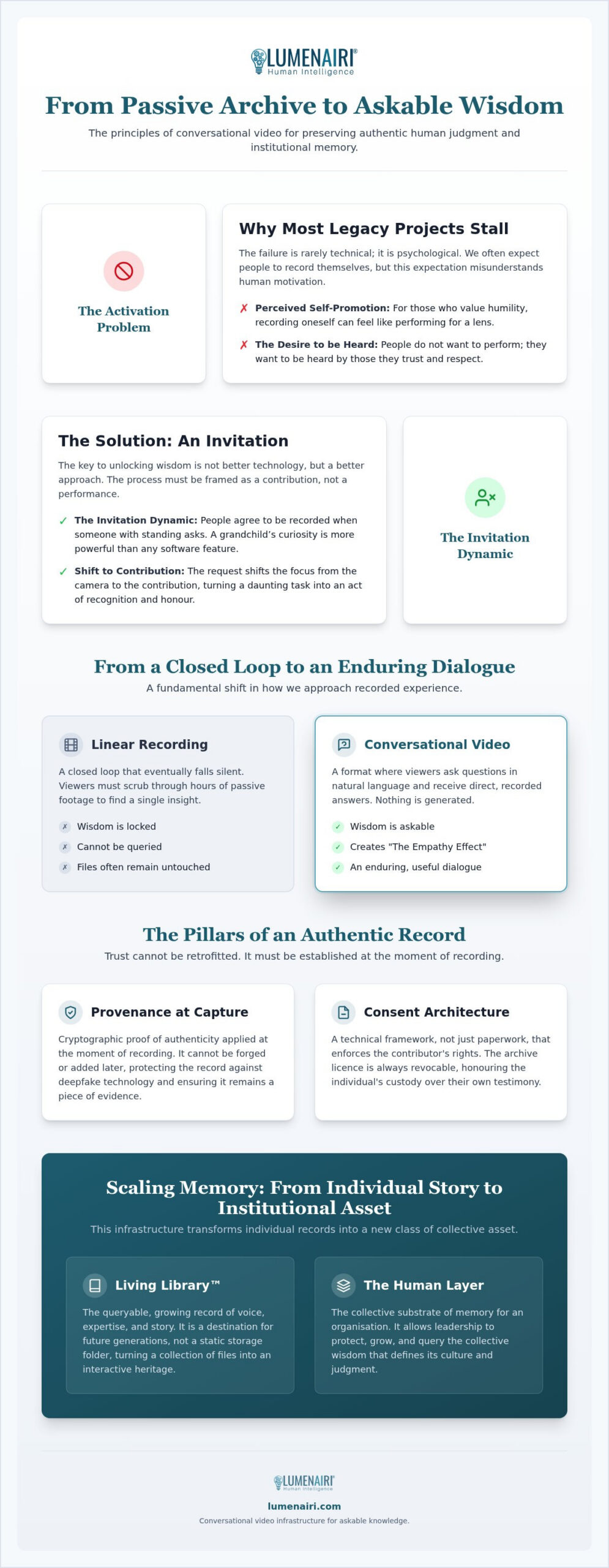
Most legacy projects fail before the first word is spoken. The reason is rarely technical. It’s psychological. We often expect elders to record themselves. This feels like self-promotion to those who value humility. They don’t want to perform for a lens. They want to be heard by those they love. This is the activation problem. It stalls thousands of potential archives every year.
The Invitation Dynamic in Practice
People agree to be recorded when someone with standing asks them. We call this the invitation dynamic. A grandchild’s curiosity is more powerful than any software feature. The request shifts the focus from the camera to the contribution. It turns a daunting task into an act of recognition and honour. In the history of interactive video, the most successful testimonies began with a direct request. The subject is answering a call to share wisdom. This dynamic is the foundation of conversational video. It replaces the vanity of recording with the dignity of being requested.
Emotional Motivation vs Operational Justification
Successful records require a specific trigger. A milestone anniversary or a transition in family leadership provides the necessary momentum. There’s an emotional desire to be heard. There’s also an operational need to preserve judgment. We must frame the recording as a duty to future generations. It’s far more than a personal memoir. It’s a sacred asset for those who come next. This approach ensures the process begins with purpose. It transforms a vague idea into a defined responsibility. We treat communication as an inheritance. By doing so, we overcome the inertia that keeps stories silent. This structure is essential for anyone building a lasting record of experience.
Conversational Video: Moving Beyond Linear Recordings to Askable Wisdom
Conversational video is a format in which a person is recorded once answering the questions they’re most likely to be asked. Viewers then ask their own questions in natural language and receive the recorded answer in that person’s own voice and face. Nothing is generated. Linear video remains a locked format. It forces viewers to scrub through hours of footage to find a single insight. This infrastructure makes wisdom askable. It ensures the record remains useful long after the conversation ends.
The empathy effect occurs when a viewer receives a direct, non-synthetic answer from a recorded subject. It’s a profound connection. It relies on the truth of the human gaze. Professional bodies have adopted similar models, such as conversational video tutorials, to bridge the gap between static information and active learning. This directness creates a sense of presence that synthetic media cannot replicate.
Why Nothing Is Generated
We maintain a critical distinction between recorded evidence and synthetic media. Generated material is unacceptable for a family or institutional archive. A synthetic avatar is a generated impression. It lacks evidentiary value. It cannot carry the weight of a person’s beliefs or their personal judgment. We record what people actually say because the truth of the testimony is the only thing that endures.
Building a Living Library™
A Living Library™ is the queryable, growing record of voice, expertise, and story. It’s a destination for future generations rather than a storage folder. It allows a family or organisation to protect their collective substrate of memory. You can begin curating your own legacy archive to ensure these stories are never lost. This approach turns a collection of files into an interactive heritage.
Implementing Trust: Provenance at Capture and the Ethics of Legacy
Trust cannot be retrofitted. It must be established at the moment of recording. In an era of increasing synthetic media, a record that cannot demonstrate it is real is not a record. It is simply digital noise. We ensure that every instance of conversational video carries its own shield of authenticity from the very first frame. This technical foundation is what separates a genuine testimony from a generated impression.
The Technical Enforcement of Truth
We apply provenance at capture to every recording. This is cryptographic proof of authenticity applied at the moment of recording. It cannot be forged. It cannot be added retrospectively. This mechanism protects the integrity of the voice and face against future deepfake technology. By securing the metadata at the source, we ensure the record remains a piece of evidence. It is a verified substrate of human memory that stands the test of time.
Consent Architecture and the Right to Silence
Ethics in memory require more than a signature. We use a robust consent architecture. This is a defined category of permission chosen by the contributor that is attached to the recording itself. Consent must be an explicit act. It is never a default checkbox hidden in terms of service. The contributor remains the primary authority over their story throughout the life of the archive. The foundation of conversational video is the absolute integrity of the source.
This framework includes a permanent right to withdraw. A contributor can revoke their archive licence at any time. In a trustworthy archive, custody is distinct from ownership. We act as guardians of the record, but the individual retains the right to be heard or to fall silent. This mutuality is essential for maintaining the dignity of the subject. It ensures that the record is a gift. You can learn more about how we protect these standards through our museums and archives solutions.
Scaling the Human Layer: From Individual Memory to Institutional Asset
The Human Layer is the collective substrate of everything an organisation does to recognise, protect, and grow the value its people carry. It begins with the individual. Capturing stories from elderly relatives or long-serving staff is the first step in building a distributed collection of corporate or family wisdom. Mobile conversational video allows for this parallel capture at scale without the constraints of a traditional studio. It enables a global workforce or a sprawling family to contribute to a shared record simultaneously.
Capturing what people actually say through conversational video is the necessary mechanism for preserving the Human Layer, and Lumenairi provides the infrastructure to make this knowledge askable. This ensures that the tacit knowledge and personal judgment of a generation remain interactive. These assets are no longer at risk of fading away.
The App Captures; Core Curates
The App captures high-fidelity, authenticated recordings in any environment. It turns a standard mobile device into a tool for secure testimony. Once the recording is finished, Core allows families and institutions to review, manage, and publish their Living Library™. This curated space becomes a vital destination for future generations. Those pursuing personal heritage projects can explore our Family solutions to start their journey.
Institutional Mirroring for Permanence
Permanence resides in institutions. A record only truly endures when it is held by an organisation with a mandate for longevity. We prioritise mirrored deposits with established archives or national libraries to ensure survival independent of any single vendor. This protects the archive against technological obsolescence or corporate change. Professional curators should examine our Museums Archives standards for managing high-status collections. This architecture guarantees that the voices we record today will remain audible and authentic for the long term.
Securing the Future of Human Wisdom
We stand at a definitive crossroads where the recording of a life can either be a static file or a living dialogue. Conversational video offers the latter. It ensures that the personal judgment and tacit knowledge of those we respect remain accessible for generations. By moving beyond linear constraints, we protect the Human Layer of our families and organisations. This shift turns a passive archive into an active inheritance.
Our commitment to non-synthetic testimony is rooted in thirty years of experience managing global archives, including leadership at the USC Shoah Foundation. We believe that nothing is more powerful than the recorded evidence of a human being heard. As an independent company, we prioritise the technical enforcement of truth through provenance at capture. This work requires a dedicated infrastructure that respects both the subject and the future viewer. Explore how to build your own Living Library™ and ensure your legacy remains askable. The stories of the past are the foundation of the future. Start your archive today.
Frequently Asked Questions
What is the difference between conversational video and an AI avatar?
Conversational video is a format where a person is recorded answering likely questions, and viewers receive the recorded answer in that person’s own voice and face. Nothing is generated. In contrast, an AI avatar relies on synthetic generation to create a generated impression of a person. We believe synthetic material lacks evidentiary value and is unacceptable for any archive that values authenticity and truth.
How do I get a camera-shy relative to agree to be recorded?
Success depends on the invitation dynamic. A person agrees to be recorded when someone with standing, such as a grandchild or a respected colleague, asks them to share their wisdom. This shift turns a technical task into an act of recognition. It removes the feeling of self-promotion and frames the recording as a necessary gift for future generations to ensure they’re heard.
Is conversational video stored permanently or can it be deleted?
We distinguish between custody and ownership. While we use mirrored deposits with institutions like national libraries to ensure longevity, the archive licence is always revocable by the contributor. A person retains a permanent right to withdraw their testimony from access at any time. This ensures that consent remains an active, enforceable choice rather than a one-time checkbox in a terms of service agreement.
Do I need a professional film crew to capture these stories?
You don’t require a professional film crew or a traditional studio. The Lumenairi App allows for high-fidelity capture on iOS and Android devices in any environment. This mobile conversational video infrastructure enables parallel capture at scale, allowing many people to be heard simultaneously. You simply need a quiet space and a standard smartphone to begin building a queryable record of experience for your organisation.
How does the search function in a Living Library™ work?
A Living Library™ uses meaning-based search rather than simple keyword or timestamp matching. Viewers ask questions in natural language, and the system retrieves the specific recorded segment where the subject addressed that topic. This allows for deep knowledge retrieval across a distributed collection. It ensures that the record stays useful and interactive long after the initial conversation has ended for those seeking wisdom.