
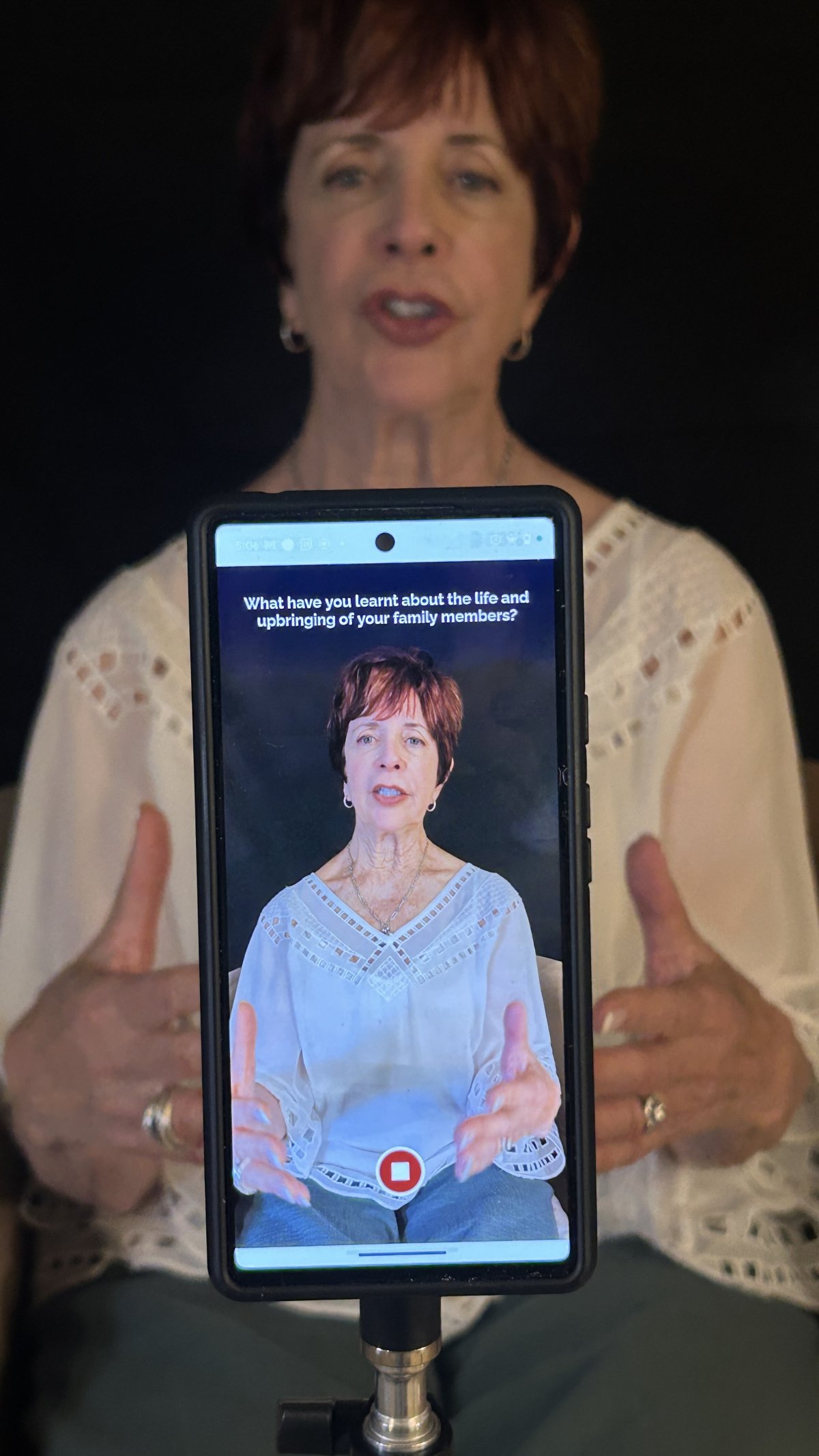
What if the most valuable inheritance your family possesses isn’t a physical heirloom, but the specific cadence of your mother’s voice or the hard-won wisdom in your father’s eyes? Most of us carry a silent fear that these stories will eventually fade into a quiet distance. You feel the urgency. The weight of time. When you consider how to record your parents’ life story, the technical complexity and the perceived awkwardness of starting such a deep conversation often keep the recorder silent.
It’s time to bridge that gap. This guide offers a professional methodology to ensure their essence remains an active part of your family’s future. You’ll discover how to move past technological overwhelm and the uncertainty of which questions to ask. We’ll show you how to build a structured archive, use the Lumenairi Mobile App for digital preservation, or employ Professional Filming Services to create a cinematic legacy that transforms personal memory into a sacred ancestral asset. Your history deserves to endure.
Key Takeaways
- Reframe the conversation as a “Legacy Invitation” that honors your parents’ experiences as an essential map for future generations.
- Master the technical nuances of how to record your parents’ life story with cinematic quality using the Lumenairi Mobile App.
- Implement the Life Cycle framework to move beyond simple facts; capture the profound wisdom and humanity found in life’s greatest transitions.
- Transition from mere digital files to a “digital sanctuary” by organizing family stories into a structured archive that lasts for centuries.
The Invitation: How to Initiate the Legacy Conversation
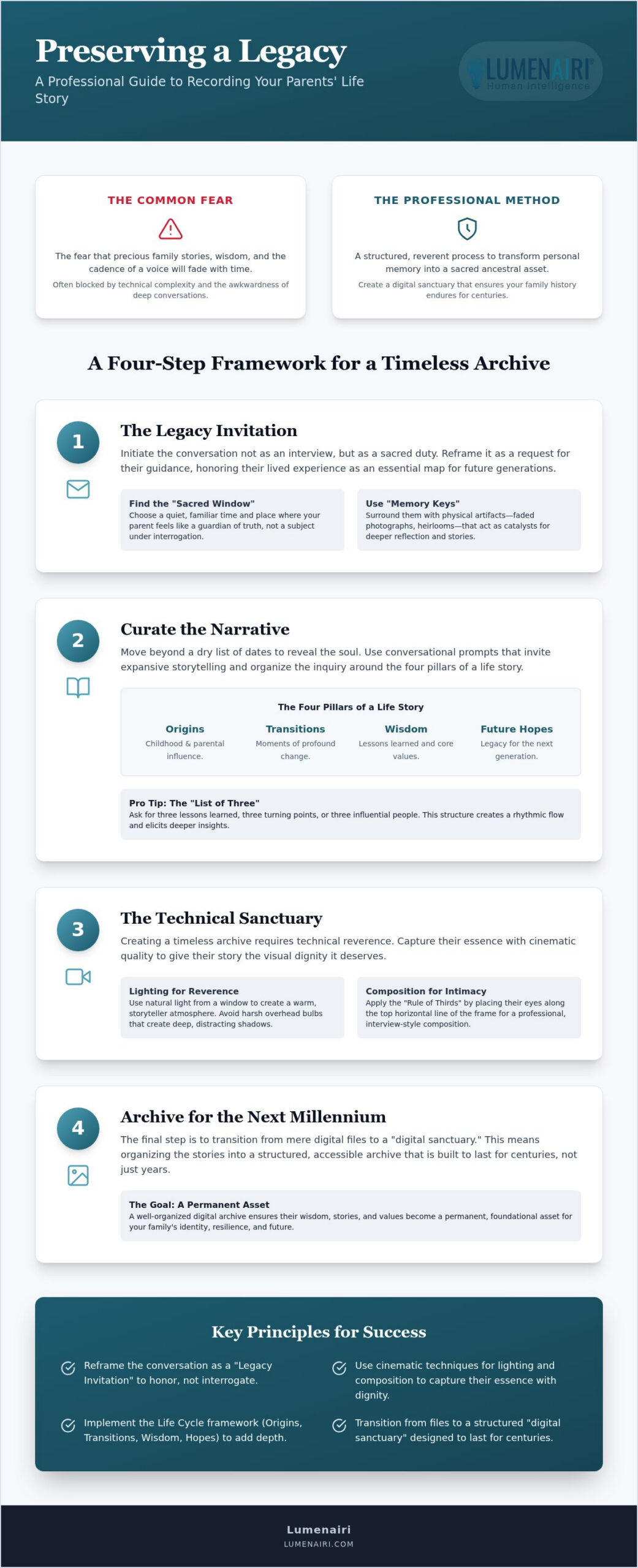
The act of beginning is often the most daunting hurdle. You aren’t simply asking for a timeline of dates; you’re extending a “Legacy Invitation.” This is a request for guidance. It’s a recognition that their lived experience holds the map for those who follow. A Legacy Invitation is a bridge between ancestral wisdom and future resilience. When you approach the question of how to record your parents’ life story, frame it as a sacred duty. You’re the prestigious guardian of their truth.
Reframing the Narrative
Many parents hesitate. They claim their lives were ordinary or even boring. Reframe this immediately. Their choices, their endurance, and their values are the foundation of your family’s identity. Understanding how to record your parents’ life story requires shifting the gaze from mere facts to the values that sustained them. This process is deeply rooted in the tradition of Oral history. Here, the focus moves from cold data to the emotional resonance of a life well-lived. By documenting these reflections, you ensure their wisdom becomes a permanent asset.
Setting the Emotional Stage
Success depends on finding the “Sacred Window.” This is a time and place where your parent feels like a guardian of truth rather than a subject under interrogation. Choose a quiet, familiar corner of their home. Surround them with “memory keys.” Use physical artifacts like faded photographs or old heirlooms that evoke specific stories. These objects act as catalysts for deeper reflection. Your role is to listen with quiet confidence. Allow space for their essence to emerge naturally. It’s a methodical process that honors the weight of their experience.
Curating the Narrative: Selecting Questions that Capture Essence
Capturing a life isn’t about a dry list of dates. It’s about revealing the soul. When you consider how to record your parents’ life story, you must move beyond simple “yes” or “no” answers. Use “Conversational Video” prompts that invite expansive storytelling. A powerful method is the “List of Three” technique. Ask for three lessons they’ve learned, three turning points that defined them, or three people who changed their trajectory. This structure creates a rhythmic flow, turning an interview into a sacred archive where you act as the prestigious guardian of their experience.
The Four Pillars of a Life Story
Organize your inquiry into a Life Cycle framework. Start with Origins to capture the “spark” of childhood and parental influence. Move to Transitions, documenting moments of profound change like career shifts, marriage, or loss. Finally, focus on Wisdom and Future Hopes. This extracts the true “Founder Heritage” of your family. What do they know now that they wish they knew then? As you work to Preserve Family Archives, these pillars ensure the recording remains a structured asset. It’s a methodical way to understand how to record your parents’ life story with lasting depth.
The Art of the Follow-Up
Silence is a tool. Use it. When a parent finishes a thought, wait. Often, the deepest memories surface in the quiet that follows. Move from event to insight by asking, “How did that change you?” This transforms a memory into a lesson. Navigating sensitive topics requires “Professional Grace” and profound reverence. If a topic feels heavy, acknowledge its weight before proceeding. Treat their vulnerability as a sacred gift. For those seeking a guided experience, the Lumenairi Mobile App provides a structured oral history tool to lead these delicate conversations with quiet confidence.
The Technical Sanctuary: Recording with Cinematic Quality
Creating a digital sanctuary requires more than just pressing record. It’s about technical reverence. When you’re learning how to record your parents’ life story, the goal is to capture their essence with cinematic quality. The Lumenairi Mobile App serves as a structured oral history tool, guiding you through this technical process with quiet confidence. It transforms a standard mobile device into a gateway for ancestral memory, ensuring the final archive feels both timeless and prestigious.
Lighting and Composition for Reverence
Visual dignity begins with light. Avoid harsh overhead bulbs that create deep shadows. Instead, use natural light from a large window to create a warm, storyteller atmosphere. Position your parent at a slight angle to the light source to add depth to their features. Apply the Rule of Thirds by placing their eyes along the top horizontal line of the frame. This creates a professional, interview-style composition that feels intimate rather than clinical. It’s a simple step that adds significant weight to the visual narrative.
Securing the Sound
Audio clarity is often more important than video resolution for emotional resonance. You must eliminate “Data Noise.” These are the background hums, ticking clocks, or sudden distractions that break the lyrical flow of a story. Use an external microphone if possible to capture the specific nuances and tremors of a parent’s voice. This is what creates the deepest connection for future generations. It’s a methodical way to ensure their wisdom is heard with absolute clarity, preserving the humanity within the recording.
While mobile tools offer incredible accessibility, some stories demand a grander scale. If you seek a truly high-end, cinematic documentary, consider Professional Filming Services. This option provides the expertise of visionary historians to craft a definitive record of your family’s heritage. Whether you choose a mobile approach or professional production, the objective remains the same: a sanctuary of human wisdom that endures for the next millennium.
Archiving for the Next Millennium: Beyond the Digital File
The final recording is not the end. It’s the beginning of a sacred trust. Once you’ve learned how to record your parents’ life story, you must ensure that story survives the shifting tides of technology. A phone gallery is a fragile repository, not a digital sanctuary. It’s prone to loss, corruption, or simple neglect. True preservation requires a Private Family Archive. This is a secure space where memories are treated as sacred assets rather than mere data. Organization is key. Tag your recordings with metadata, categorizing stories by theme, date, and wisdom type. This allows future generations to find specific guidance exactly when they need it most. It turns a vast library of video into a searchable map of human experience.
Combatting Digital Fragility
Digital rot is a silent thief. To protect your family’s collective memory, follow the 3-2-1 Rule. Maintain three separate copies of your archive. Use two different formats, such as cloud storage and physical drives. Finally, keep one copy in a dedicated off-site sanctuary. While social media is transient and public, a dedicated heritage platform offers the permanence and privacy your ancestry deserves. It ensures your parents’ voices don’t vanish into a forgotten feed. You’re building for the next century, not the next season.
The Living Archive
A legacy shouldn’t be a static file. It’s a multi-generational conversation. By using the Lumenairi Core, you can manage and share this cultural heritage with intentionality. It allows you to create a rhythmic, steady flow of storytelling. You can introduce these lessons to children and grandchildren at the perfect moment. The process of how to record your parents’ life story transforms from a singular task into an enduring family project. You aren’t just saving a file. You’re protecting a soul. It’s a methodical approach to ensuring that wisdom remains alive, accessible, and profoundly impactful for those yet to be born.
Securing Your Ancestral Future
The window for capturing a life story is unique and fleeting. By mastering how to record your parents’ life story, you transform a series of memories into a permanent ancestral asset. You’ve learned to invite their wisdom with grace, curate their narrative through the Life Cycle framework, and achieve cinematic quality that honors their dignity. This isn’t just about data. It’s about humanity.
True preservation requires a transition from temporary files to a secure digital heritage platform. Whether you choose the expert guidance of oral history pioneers or professional filming services, you’re building a bridge for the next millennium. The effort you invest today ensures that your parents’ voices remain a living presence for generations to come. This sacred responsibility yields the greatest of rewards. Your history is waiting to be protected.
Preserve your family’s wisdom with the Lumenairi Mobile App and start building your digital sanctuary today. We are here to help you honor the stories that define you.
Frequently Asked Questions
What are the best questions to ask my parents for a life story recording?
Focus on open-ended prompts that reveal values and turning points rather than simple dates. Ask about their earliest memories of home, the person who most influenced their character, and the hardest decision they ever made. Using the Life Cycle framework ensures you move past surface-level facts to capture the essence of their humanity. This approach transforms the recording into a true sanctuary of wisdom for your family.
Do I need professional equipment to record a family oral history?
You don’t need a professional studio to achieve cinematic quality. Modern mobile devices are capable of capturing stunning detail when paired with natural lighting and an external microphone. The Lumenairi Mobile App provides a specialized oral history tool that guides you through these technical nuances with quiet confidence. If you desire a high-production documentary, you can always choose Professional Filming Services to create a definitive record.
How do I handle sensitive or painful topics during a legacy interview?
Approach difficult memories with professional grace and profound reverence. If a parent becomes emotional, offer them the gift of silence and let them decide whether to proceed. Acknowledge the weight of the experience and remind them that their vulnerability serves as a map for future generations. When learning how to record your parents’ life story, treating these moments as sacred assets ensures the process remains supportive.
How long should a life story recording session be?
Respect their energy by limiting sessions to 60 or 90 minutes at a time. Recording a life story is an intensive emotional process for both the storyteller and the guardian. It’s often better to conduct multiple shorter interviews than one long, exhausting session. This methodical approach allows memories to settle and new insights to surface between meetings. Patience is a virtue when building a legacy that lasts.
Where is the safest place to store digital family history files?
The safest place is a dedicated digital sanctuary that follows the 3-2-1 preservation rule. Avoid relying on social media or a single hard drive, as these are prone to digital rot. Store your files in a secure, cloud-based platform like the Lumenairi Core, which is designed for long-term heritage management. A structured archive provides the security and privacy required to protect your family’s collective memory for the next millennium.