Tag: family history

  • The Living Library™: Why Recording Family History Demands More Than Data

    The Living Library™: Why Recording Family History Demands More Than Data

    Is your judgment more valuable than your estate? Most of us recognise the inherent value in preserving our heritage. We collect photographs, digitise letters, and build extensive family trees. Yet, the primary benefits of recording family history are often lost when we treat these memories as mere data points. A name on a census record tells us where someone lived. It cannot convey how they felt or why they made the choices that defined their lives.

    I will explore why the true legacy of an individual resides in the Human Layer. You will discover how moving beyond static records to conversational video ensures that wisdom remains askable and authentic for future generations. We will examine the necessity of protecting a contributor’s agency while creating a permanent, queryable record of experience. By focusing on the invitation dynamic and the Human Layer Index, we can transform cold archives into a Living Library™.

    Key Takeaways

    • Recognise why the primary benefits of recording family history lie in capturing the Human Layer rather than just collecting names and dates.
    • Understand how the empathy effect creates a physiological connection that synthetic media or written memoirs cannot replicate.
    • Discover how conversational video transforms a static archive into a Living Library™ where wisdom remains permanently askable.
    • Evaluate why provenance at capture and consent architecture are essential technical enforcements for maintaining the integrity of a personal record.

    Beyond Genealogy: Preserving the Human Layer of Wisdom

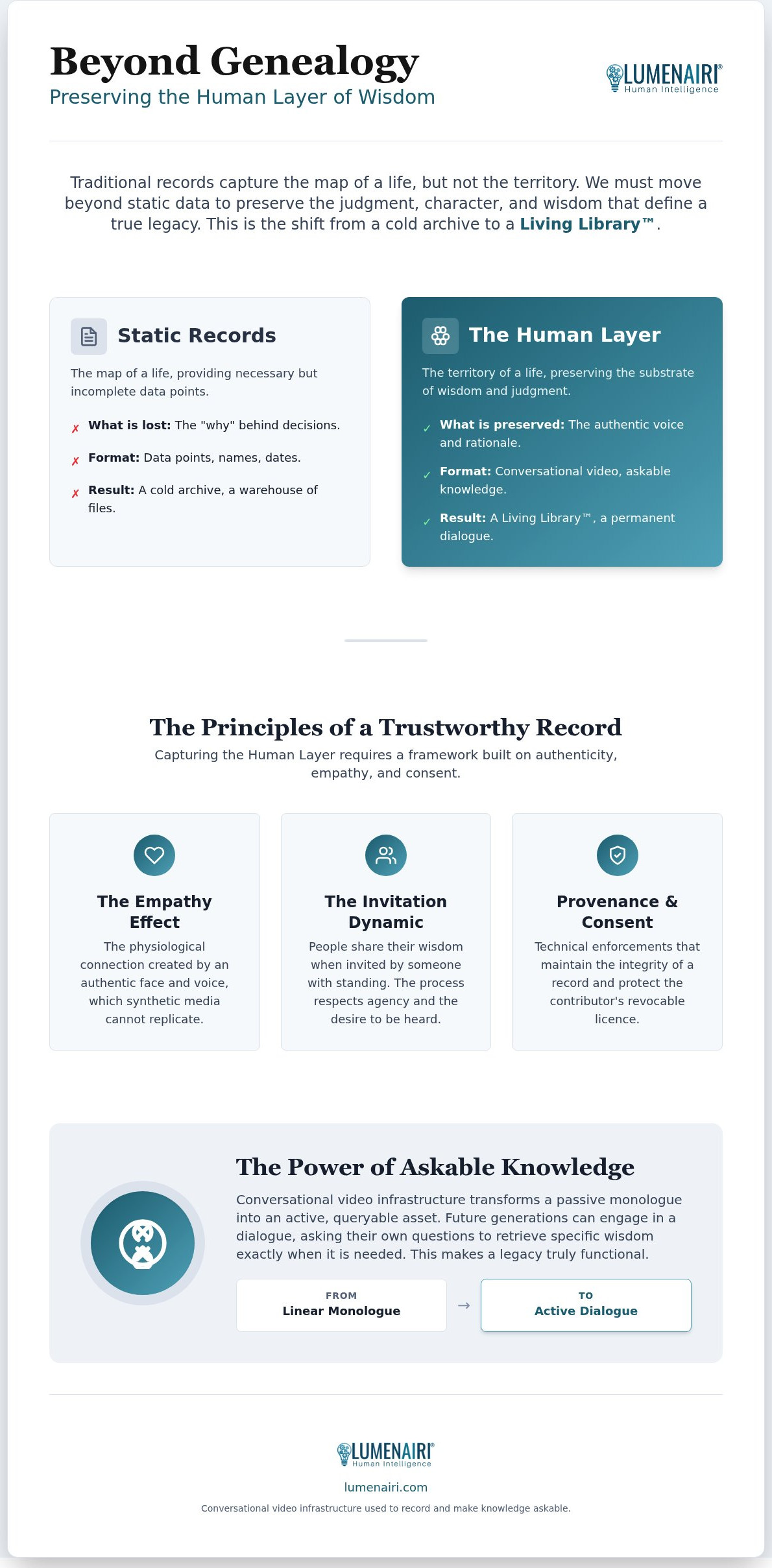
    Genealogy provides the map of a life. It is precise. It is necessary. But it is not the territory. A birth certificate confirms existence but reveals nothing of character. We currently systematise the collection of fingerprints and genomes. We ignore the third record: the story. This is The Human Layer. I define this as the collective substrate of everything an individual or organisation does to recognise and grow value. One of the primary benefits of recording family history is the preservation of this substrate. Without it, we lose the judgment and technical expertise that names and dates fail to capture.

    The Vulnerability of Institutional Memory

    When a founder or elder passes, we experience institutional knowledge loss. This is an operational crisis as much as a personal one. We lose the “why” behind the “what”. The cost is measured in the silence where a voice once offered guidance. This tradition of Oral history is the only way to safeguard the wisdom that keeps a legacy functional. It ensures that the technical expertise of a lifetime isn’t buried with the person who earned it.

    The Invitation Dynamic: Why We Record

    Nobody records themselves. Success in capturing these stories requires the invitation dynamic. People agree to speak when someone with standing asks them. They don’t want to engage in “content creation”. They want the dignity of being heard. When we frame the process as a request for wisdom, we protect the contributor’s agency. This shift in perspective ensures that the records we keep are authentic. It moves the focus from data collection to the preservation of a living legacy.

    The Empathy Effect: The Power of the Authentic Voice

    Text is a filter. When a ghostwriter interprets a life, the reader encounters the writer’s bias. The subject’s soul is often lost in the translation. Recorded evidence removes this barrier. I define the empathy effect as the physiological connection created by seeing a face and hearing a voice. It is a mirror response that creates a profound sense of presence. Research into the therapeutic value of family stories suggests that these narratives build resilience and identity across generations. Recognising the benefits of recording family history allows us to value the person over the data. When we hear the “own voice”, we witness authentic evidence of what a person believed. In an era where data are overwhelmingly correlational, this non-synthetic substrate protects against the loss of the individual.

    One of the vital benefits of recording family history through direct testimony is the preservation of unvarnished truth. A synthetic avatar might mimic a physical likeness. It cannot replicate the weight of a lived decision. We require the recorded truth of the individual to maintain a sense of continuity. Without the face and voice, the record becomes a cold archive. It functions as a living presence only when the human element remains intact. This is the difference between reading a transcript and being heard across time.

    Voice as a Primary Asset

    Tone and cadence are the primary vehicles for judgment. A deliberate pause conveys more than a page of text. A slight tremor in the voice reveals the true weight of a memory. These are the markers of wisdom that remain useful long after the conversation ends. By securing these assets, we ensure that virtual ancestry remains a human experience. It is a lived reality. This methodical approach to preserving founder heritage treats the individual as the primary source of their own story. It is a commitment to the enduring value of human experience.
    The Living Library™: Why Recording Family History Demands More Than Data

    From Static Archive to Living Library™

    Traditional video is linear. It is a monologue. We store it in archives where it remains difficult to navigate and easy to ignore. A dead archive is a warehouse of files. A Living Library™ is a queryable asset. One of the primary benefits of recording family history is the ability to maintain a dialogue across time. While institutions often discuss the benefits of writing your family history, the written word remains static. Conversational video is infrastructure used to record and make knowledge askable. It allows a person to be recorded once so that future generations can later ask their own questions. It is the transition from a passive monologue to an active relationship.

    To transform these stories into a queryable asset, organisations require conversational video infrastructure like Lumenairi to ensure the record remains authentic and accessible. This shift changes the fundamental nature of the archive. It moves from passive storage to active custody. We don’t just save files; we protect the invitation to speak and the right to be understood.

    Making Wisdom Askable

    Meaning-based searchability allows future generations to retrieve specific knowledge exactly when it is needed. It is the difference between watching a three-hour film and receiving a ten-second answer. This is the essence of custody. We don’t just store data. We preserve the ability to be heard. This level of engagement is vital for Founder Heritage programmes. It ensures that the technical expertise and values of a leader are never lost to the friction of a linear file. We must recognise that the benefits of recording family history are only realised when the wisdom remains askable and immediate.

    Secure your institution’s collective memory by establishing a managed Living Library™ today.

    A record that cannot demonstrate its own authenticity is not a record. It is merely content. In an era of synthetic media and deep correlations, the value of testimony depends entirely on its integrity. One of the primary benefits of recording family history is the creation of a verifiable legacy. This requires provenance at capture. I define this as cryptographic proof applied at the moment of recording. It ensures that what you see and hear is the original, unaltered human voice. Trust cannot be retrofitted to an archive. It must be established at the point of origin.

    Authenticity is a technical enforcement. It is not a promise made in a brochure. By securing the Human Layer with cryptographic certainty, we protect the contributor from being misrepresented or exploited. This is the foundation of a Living Library™. It transforms a collection of files into a trustworthy substrate of wisdom that remains useful for generations. Without these technical protections, the benefits of recording family history are undermined by the risk of digital manipulation.

    The Ethics of Preservation

    Contribution must always be a conscious choice. We reject the use of default checkboxes or hidden terms that obfuscate intent. I believe in a consent architecture that functions as a gate. This ensures permissions are both explicit and revocable by the contributor at any time. We use a comprehension test: if a person cannot explain the consent in one sentence, the consent is not valid. This approach is central to building Community Archives that respect the individual and the story. We treat the right to be heard as a sacred asset. It is a commitment to the agency of the person sharing their story. We don’t just hold material; we maintain a relationship of trust.

    Securing the Human Layer for the Future

    The preservation of memory is a responsibility we owe to the future. We’ve seen how the primary benefits of recording family history extend far beyond the collection of genealogical data. It is the systematic protection of the Human Layer. By capturing the face and voice, we ensure that judgment and wisdom remain accessible. This requires more than storage. It demands a queryable infrastructure.

    Authenticity is the cornerstone of this endeavour. Without cryptographic proof and explicit agency, a record is merely content. We must prioritise the individual’s right to be heard through a framework that respects their ownership. This is why we rely on conversational video experts to build systems rooted in trust. You can now ensure that your legacy remains askable, authentic, and entirely within your control.

    Begin building your queryable Living Library™ with Lumenairi. Our platform provides cryptographic provenance at capture and a revocable consent architecture to protect every story. Your wisdom is a sacred asset. It’s time to ensure it endures.

    Frequently Asked Questions

    What is the difference between recording family history and genealogy?

    Genealogy provides the structural framework of a lineage through names, dates, and vital records. One of the primary benefits of recording family history is the preservation of the Human Layer, which I define as the collective substrate of everything an individual or organisation does to recognise, protect, and grow the value its people carry. While genealogy maps the life, recording the story preserves the individual’s actual voice, judgment, and lived experience.

    How does conversational video differ from a standard video interview?

    Standard video interviews are linear monologues that require viewers to watch at length to find specific information. Conversational video is a format in which a person is recorded once answering the questions they are most likely to be asked, and viewers then ask their own questions in natural language and receive the recorded answer in that person’s own voice and face. This infrastructure transforms a passive file into an interactive, queryable asset where nothing is generated.

    Why is cryptographic provenance important for family records?

    Provenance at capture is cryptographic proof of authenticity applied at the moment of recording, which cannot be forged and cannot be added retrospectively to generated material. In an age of synthetic media, this technical enforcement ensures that a record can demonstrate it is real. It is a vital component for those seeking the benefits of recording family history, as it protects the integrity of the individual’s testimony against future manipulation.

    Can a contributor withdraw their story from the Living Library™?

    Contributors retain a permanent and revocable right to withdraw their testimony from access at any time. Our consent architecture ensures that permissions are a defined category of permission chosen by a contributor at the moment of recording, attached to the recording itself, governing what may be done with it. If a contributor chooses to withdraw, the material is removed from queryable access to protect the individual’s agency and maintain the integrity of their choices.

    Why is the “invitation dynamic” necessary for successful story capture?

    The invitation dynamic is the observation that people agree to be recorded when someone with organisational standing asks them. We’ve found that activation is the primary barrier to capturing knowledge because most people are reluctant to record themselves. When a leader or family member makes a formal request, it validates the subject’s experience and transforms the process from an act of self-promotion into a significant contribution to a legacy.
  • Why telling our stories matters for future generations

    Why telling our stories matters for future generations

    What if the most profound inheritance you leave behind isn’t found in a deed or a bank account, but in the specific cadence of your voice and the hard-won wisdom of your lived experience? It’s a question that haunts many of us as we look at dusty boxes of fading photos, silent cassettes, and unlabelled documents. We feel a quiet urgency. We fear the voice and personality of those we love is slipping away. Families struggle with the task of preserving family history for future generations, feeling buried by the sheer volume of unorganized artifacts. You aren’t alone in this desire to protect what’s sacred.

    This article offers a methodical, reverent approach to safeguarding your narrative. We move beyond physical clutter to capture the essence of your ancestors. You’ll discover how to create a curated, permanent digital sanctuary that fosters a deeper emotional connection with those who came before. We will guide you through turning fragile memories into an enduring legacy through cinematic quality, intentional curation, and technological assurance. It’s time to find peace in knowing your story is secure.

    Key Takeaways

    • Embrace your role as a guardian of a Living Library. You’ll learn to treat every elder’s story as a sacred repository of wisdom rather than a simple collection of facts.
    • Apply a narrative filter to your archives. This ensures you’re preserving family history for future generations by focusing on the artifacts that reveal true character and core values.
    • Elevate your oral history interviews. Move past chronological timelines to uncover the deep, philosophical reflections that capture a loved one’s authentic voice.
    • Secure your legacy with digital stewardship. Use the 3-2-1 backup rule to build a resilient archive that remains accessible and protected against the passage of time.

    The Architecture of Memory: Why Preserving Family History is a Sacred Duty

    To engage in the study of family history is to accept a profound responsibility. It isn’t merely about collecting dates or names. It’s the active safeguarding of ancestral wisdom and personal identity. We must view our elders as a Living Library. Every patriarch and matriarch is a repository of unique knowledge. They hold the institutional memory of a lineage. When an elder passes without their story being told, a library burns to the ground. This makes the task of preserving family history for future generations a sacred duty rather than a casual hobby.

    When you take on the role of the Guardian, you become the vital bridge. You connect past silence to future connection. Without this bridge, we risk losing the living essence of our people. Physical artifacts are inherently fragile. A silver watch or a hand-stitched quilt carries little weight if the context has faded. True preservation requires us to capture the “why” behind the “what.” We must move beyond the object to reach the soul of the experience.

    The Cost of Silence

    Memory is delicate. Often, three generations is the limit before a vivid story dissolves into a mere name on a chart. Narrative loss is the disappearance of the “why” behind the “what” in our shared ancestral experience. Without intervention, the vibrant voice of a great-grandparent becomes an echo that eventually vanishes into silence. We lose the philosophy that guided their hands and the resilience that built our present.

    Transcending the Physical

    There’s a vital difference between hoarding old items and curating a legacy. One is a collection of clutter. The other is a sanctuary of meaning. Digital narratives offer a permanence that physical paper cannot match. They ensure that preserving family history for future generations is a dynamic, accessible process. By moving stories into a digital sanctuary, we grant them the endurance they deserve.

    Curating Your Legacy: Determining What to Save for Future Generations

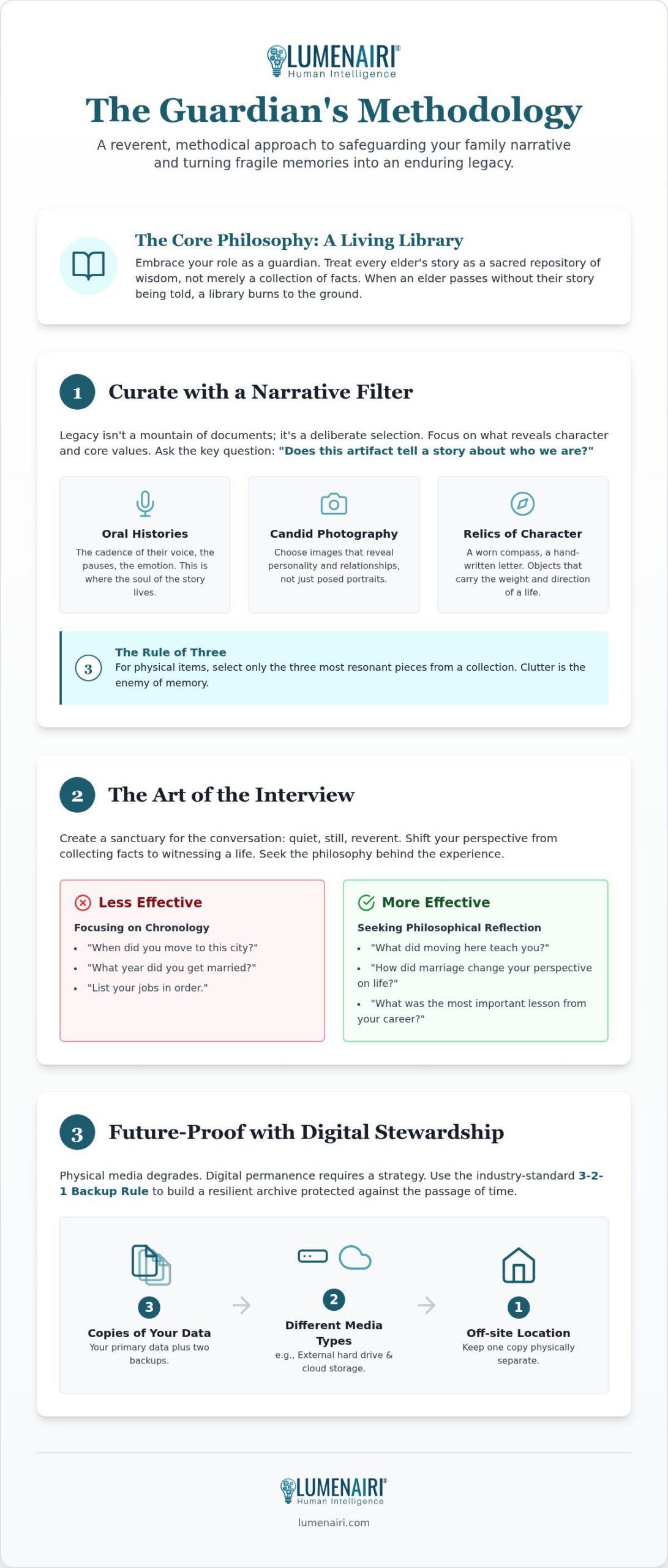
    Legacy isn’t a mountain of documents. It’s a deliberate selection. We must apply a “Narrative Filter” when preserving family history for future generations. Ask: does this object define our family values? If it doesn’t tell a story, it’s just data. To truly Preserve Family Archives, we focus on the three pillars: oral histories, candid photography, and relics of character. A relic of character might be a grandfather’s worn compass. It speaks of his direction. It carries his weight. These items breathe.

    Curation requires discipline. Follow the Rule of Three for physical items. Select only the three most resonant pieces from a collection to avoid overwhelming your heirs. Clutter is the enemy of memory. Metadata is the cure. Record names, dates, and the specific “story behind the photo.” Without this context, a face is just a stranger from the past. Meaning resides in the details.

    The Narrative Filter in Practice

    Choose artifacts that reveal the soul. A business ledger is logistics. A letter home from a difficult journey is personality. When documenting the professional journey of a patriarch, using Founder Heritage frameworks ensures the wisdom of leadership survives. It transforms a career into a lesson for those who follow. It turns success into a roadmap.

    Managing the Digital Transition

    Technology moves fast. VHS tapes and slides are fragile relics. Migrating these to modern, redundant formats is a necessity for preserving family history for future generations. Use clear naming conventions to ensure files remain findable. This digital stewardship keeps the past accessible. If you seek a permanent home for these treasures, consider the Lumenairi Mobile App as your digital sanctuary.

    Why telling our stories matters for future generations

    The Art of the Interview: Capturing Oral Histories

    The room must be a sanctuary. Quiet. Still. Reverent. When we sit across from an elder, we are not merely recording data; we are witnessing a life. This environment serves as the foundation for preserving family history for future generations. It signals that what follows is significant. It honors the speaker. It creates the safety required for vulnerability.

    The Guardian’s Methodology requires a shift in perspective. We move beyond the rigidity of chronological facts. We seek philosophical reflections. Instead of asking for a date, we ask for a meaning. High-quality audio and cinematic framing transform a simple conversation into an enduring heirloom. Use the “Silent Interviewer” technique. Allow for pauses. Let the emotional weight of a memory settle before moving forward. Silence is often where the deepest truth resides.

    Crafting Questions That Resonate

    Move past surface-level inquiries. Instead of “Where were you born?”, ask “What moment defined your understanding of courage?” Wisdom emerges from the struggle. Consider these legacy questions:

    • What is the most important truth you’ve discovered about love?
    • Which of your ancestors’ traits do you see most clearly in yourself?
    • If you could speak to your descendants a century from now, what warning would you give?

    For those who wish to ensure these insights reach a wider audience, the Society of American Archivists offers guidance on donating family records to public institutions.

    Creating a Sanctuary for Storytelling

    Lighting should be soft and intentional. The background must suggest a “portrait of a life” without distracting from the subject’s face. To achieve this level of structured, graceful capture, the Lumenairi Mobile App provides a sophisticated framework for the home historian. It guides you through the process of preserving family history for future generations with ease. If you prefer a truly cinematic standard, explore our professional filming services to honor your family’s most important voices.

    Future-Proofing Your Heritage: Digital Stewardship and the Living Archive

    Digital stewardship is an ongoing commitment to accessibility and security. It is the active labor that prevents a digital archive from becoming a digital graveyard. Without this care, our most precious recordings face the silent threat of technological obsolescence. We must approach the task of preserving family history for future generations with a methodical rigor that matches our reverence. Follow the 3-2-1 backup rule. Keep three copies of your records. Use two different formats. Store one copy off-site in a secure cloud environment. This creates a Living Archive. It is a collection meant to be viewed, shared, and celebrated, rather than hidden in a closet.

    Professional documentation serves as the ultimate insurance against the erosion of time. It anchors the narrative. It provides the clarity that fragmented snapshots cannot offer on their own.

    From Data to Legacy

    Specialized platforms like Lumenairi Core provide a digital sanctuary for family wisdom. In an era of public social media, privacy and controlled access are paramount. Your family’s private reflections deserve a space that is secure and intentional. This ensures the collective memory remains an exclusive treasure for your descendants. It transforms raw data into an enduring legacy that survives the shifting tides of software and hardware.

    The Professional Standard

    For high-stakes legacy projects, enlisting professional filming services is the gold standard. A cinematic biography acts as a centerpiece for multi-generational learning. It offers a window into the past that is both immediate and timeless. When you choose professional capture, you invest in the permanence of your family’s voice. You ensure that the wisdom of the past remains a living force for the future, successfully preserving family history for future generations in its most potent and cinematic form.

    Securing Your Place in the Living Library

    The artifacts of our lives remain silent without the breath of our stories. We’ve explored how moving beyond physical hoarding allows us to curate a legacy of true character. We’ve learned that the art of the interview requires a sanctuary of quiet and a focus on philosophical wisdom rather than mere dates. Most importantly, we’ve established that preserving family history for future generations is a sacred duty that requires diligent digital stewardship. It isn’t enough to record. We must protect and share.

    Lumenairi is rooted in world-class conversational video technology. It offers cinematic-quality documentation that transforms memories into a living force. You don’t have to navigate this journey alone. If you desire to anchor your family’s narrative against the fog of memory, then a dedicated sanctuary is the only path to permanence. You can secure your family’s legacy with the Lumenairi Mobile App. This private sanctuary ensures your most precious wisdom is never lost to the erosion of time. Your voice is a gift. It’s time to ensure it’s heard by those who haven’t yet been born.

    Frequently Asked Questions

    What is the best way to start preserving family history if I’m overwhelmed?

    Focus on one person and one story at a time to avoid the paralysis of a vast archive. Identify the eldest member of your family and begin with a single, focused session. You don’t need to organize every photo immediately. Instead, prioritize the living voice. By starting small, you ensure that the task of preserving family history for future generations feels manageable and sacred rather than burdensome.

    How do I interview a relative who is reluctant to talk about the past?

    Shift the focus from a formal interview to a collaborative reflection. Bring a “relic of character,” such as an old tool or a cherished photograph, to serve as a catalyst for memory. Ask about the feelings associated with the object rather than seeking specific dates. When you treat the conversation as a shared exploration of wisdom, the subject often feels honored rather than interrogated, allowing their authentic voice to emerge naturally.

    What digital file formats are most likely to last for 50 or 100 years?

    Choose non-proprietary, open-source formats that are widely adopted by global archives. For documents, PDF/A is the standard for long-term preservation. High-resolution TIFF files are preferred for photography, while uncompressed WAV files protect audio integrity. For video, H.264 or H.265 within an MP4 container offers a balance of quality and compatibility. These formats are designed to survive software shifts and ensure your digital legacy remains accessible for decades.

    How can I involve younger generations in preserving our family heritage?

    Invite younger family members to serve as the technological bridge for the project. Assign them specific roles, such as managing the digital sanctuary or assisting with the cinematic setup for oral histories. This participation fosters a sense of stewardship and responsibility toward their own ancestry. When they act as the “Guardians” of the technology, they develop a deeper emotional connection to the stories they are helping to protect and transmit.

    Is it better to use a dedicated app or just save files to a cloud drive?

    Cloud drives are merely storage repositories, while a dedicated app serves as a digital sanctuary. A platform like the Lumenairi Mobile App provides the structure, prompts, and cinematic frameworks necessary for true storytelling. It moves beyond raw data to curate a Living Library of wisdom. While cloud storage is a vital part of the 3-2-1 backup rule, a specialized tool ensures that the human element remains at the center of the archive.

  • Record Your Parents’ Life Story: A Guide to Legacy

    Record Your Parents’ Life Story: A Guide to Legacy

    What if the most valuable inheritance your family possesses isn’t a physical heirloom, but the specific cadence of your mother’s voice or the hard-won wisdom in your father’s eyes? Most of us carry a silent fear that these stories will eventually fade into a quiet distance. You feel the urgency. The weight of time. When you consider how to record your parents’ life story, the technical complexity and the perceived awkwardness of starting such a deep conversation often keep the recorder silent.

    It’s time to bridge that gap. This guide offers a professional methodology to ensure their essence remains an active part of your family’s future. You’ll discover how to move past technological overwhelm and the uncertainty of which questions to ask. We’ll show you how to build a structured archive, use the Lumenairi Mobile App for digital preservation, or employ Professional Filming Services to create a cinematic legacy that transforms personal memory into a sacred ancestral asset. Your history deserves to endure.

    Key Takeaways

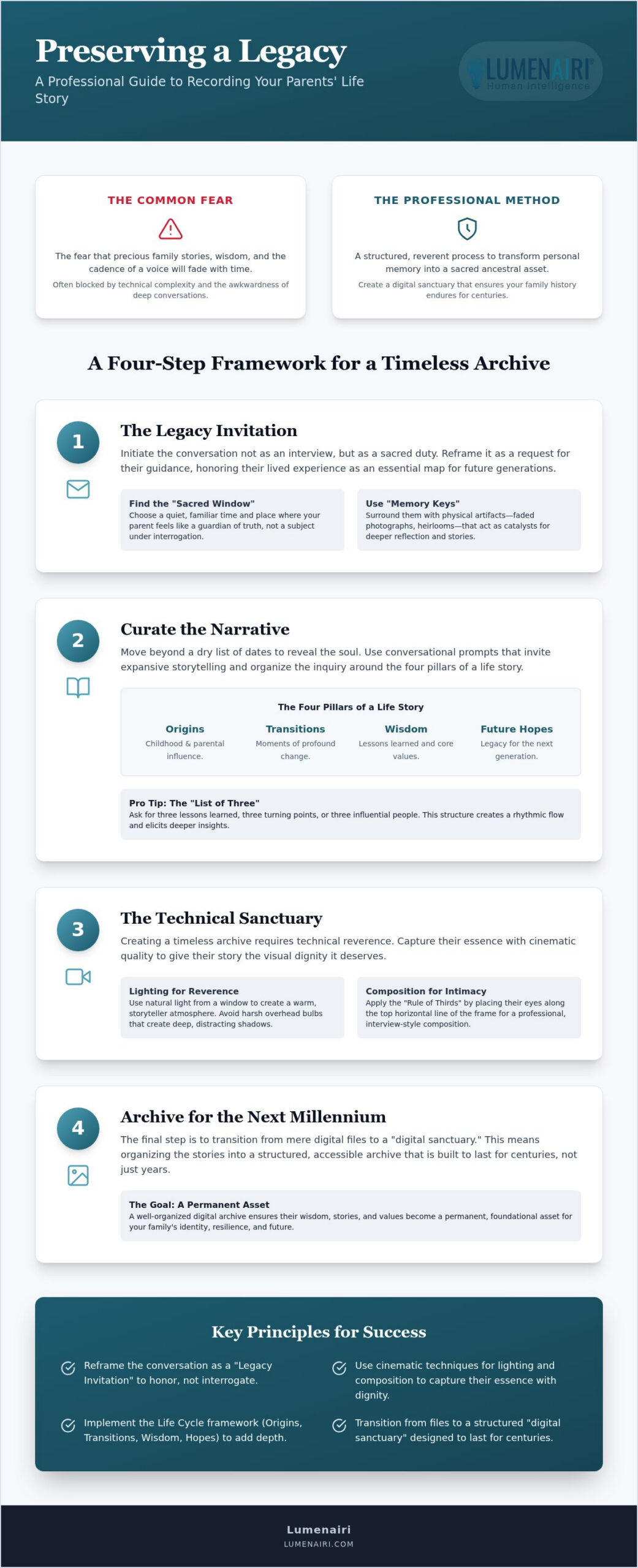
    • Reframe the conversation as a “Legacy Invitation” that honors your parents’ experiences as an essential map for future generations.
    • Master the technical nuances of how to record your parents’ life story with cinematic quality using the Lumenairi Mobile App.
    • Implement the Life Cycle framework to move beyond simple facts; capture the profound wisdom and humanity found in life’s greatest transitions.
    • Transition from mere digital files to a “digital sanctuary” by organizing family stories into a structured archive that lasts for centuries.

    The Invitation: How to Initiate the Legacy Conversation

    The act of beginning is often the most daunting hurdle. You aren’t simply asking for a timeline of dates; you’re extending a “Legacy Invitation.” This is a request for guidance. It’s a recognition that their lived experience holds the map for those who follow. A Legacy Invitation is a bridge between ancestral wisdom and future resilience. When you approach the question of how to record your parents’ life story, frame it as a sacred duty. You’re the prestigious guardian of their truth.

    Reframing the Narrative

    Many parents hesitate. They claim their lives were ordinary or even boring. Reframe this immediately. Their choices, their endurance, and their values are the foundation of your family’s identity. Understanding how to record your parents’ life story requires shifting the gaze from mere facts to the values that sustained them. This process is deeply rooted in the tradition of Oral history. Here, the focus moves from cold data to the emotional resonance of a life well-lived. By documenting these reflections, you ensure their wisdom becomes a permanent asset.

    Setting the Emotional Stage

    Success depends on finding the “Sacred Window.” This is a time and place where your parent feels like a guardian of truth rather than a subject under interrogation. Choose a quiet, familiar corner of their home. Surround them with “memory keys.” Use physical artifacts like faded photographs or old heirlooms that evoke specific stories. These objects act as catalysts for deeper reflection. Your role is to listen with quiet confidence. Allow space for their essence to emerge naturally. It’s a methodical process that honors the weight of their experience.

    Curating the Narrative: Selecting Questions that Capture Essence

    Capturing a life isn’t about a dry list of dates. It’s about revealing the soul. When you consider how to record your parents’ life story, you must move beyond simple “yes” or “no” answers. Use “Conversational Video” prompts that invite expansive storytelling. A powerful method is the “List of Three” technique. Ask for three lessons they’ve learned, three turning points that defined them, or three people who changed their trajectory. This structure creates a rhythmic flow, turning an interview into a sacred archive where you act as the prestigious guardian of their experience.

    The Four Pillars of a Life Story

    Organize your inquiry into a Life Cycle framework. Start with Origins to capture the “spark” of childhood and parental influence. Move to Transitions, documenting moments of profound change like career shifts, marriage, or loss. Finally, focus on Wisdom and Future Hopes. This extracts the true “Founder Heritage” of your family. What do they know now that they wish they knew then? As you work to Preserve Family Archives, these pillars ensure the recording remains a structured asset. It’s a methodical way to understand how to record your parents’ life story with lasting depth.

    The Art of the Follow-Up

    Silence is a tool. Use it. When a parent finishes a thought, wait. Often, the deepest memories surface in the quiet that follows. Move from event to insight by asking, “How did that change you?” This transforms a memory into a lesson. Navigating sensitive topics requires “Professional Grace” and profound reverence. If a topic feels heavy, acknowledge its weight before proceeding. Treat their vulnerability as a sacred gift. For those seeking a guided experience, the Lumenairi Mobile App provides a structured oral history tool to lead these delicate conversations with quiet confidence.

    Record Your Parents’ Life Story: A Guide to Legacy

    The Technical Sanctuary: Recording with Cinematic Quality

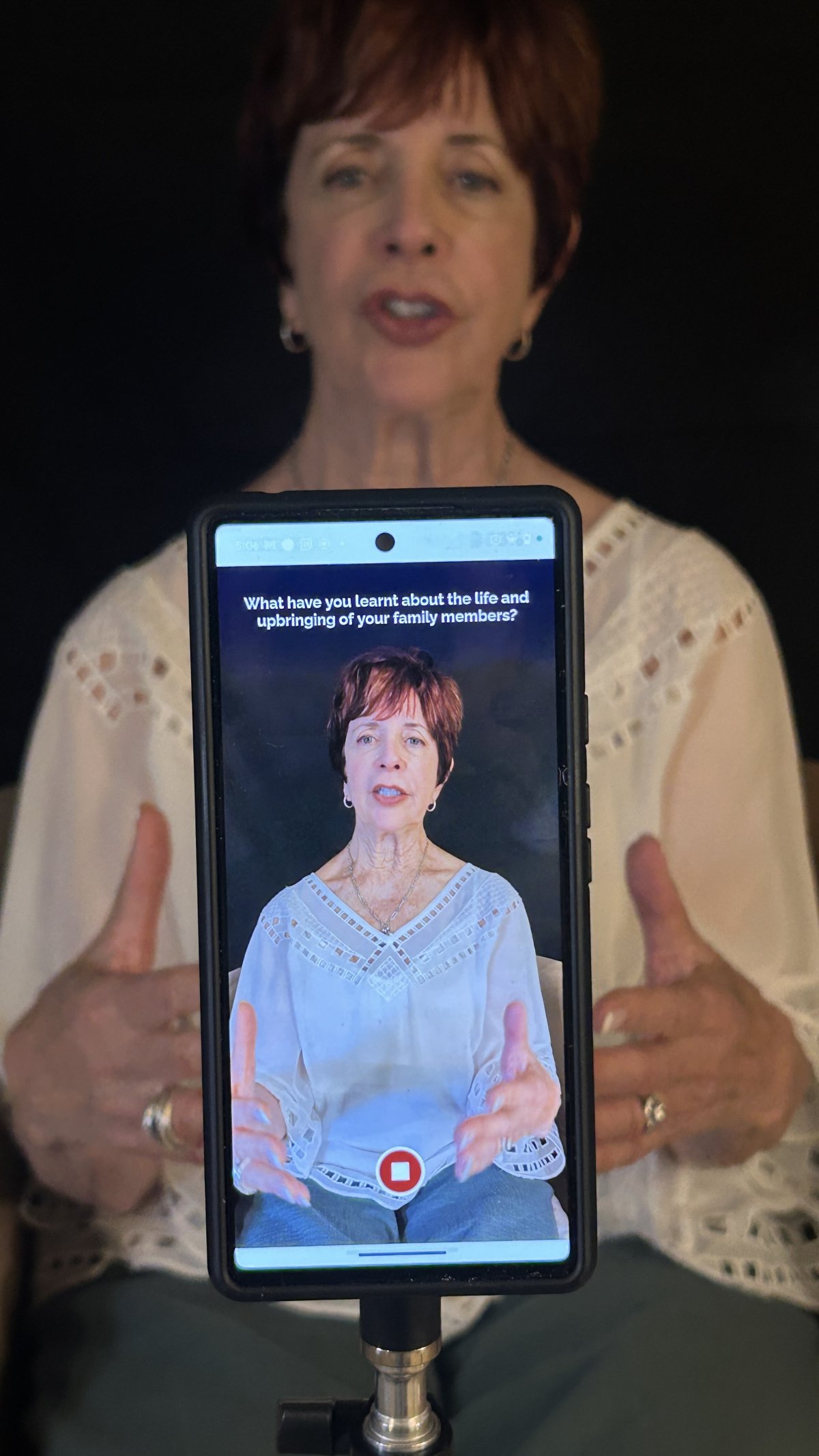
    Creating a digital sanctuary requires more than just pressing record. It’s about technical reverence. When you’re learning how to record your parents’ life story, the goal is to capture their essence with cinematic quality. The Lumenairi Mobile App serves as a structured oral history tool, guiding you through this technical process with quiet confidence. It transforms a standard mobile device into a gateway for ancestral memory, ensuring the final archive feels both timeless and prestigious.

    Lighting and Composition for Reverence

    Visual dignity begins with light. Avoid harsh overhead bulbs that create deep shadows. Instead, use natural light from a large window to create a warm, storyteller atmosphere. Position your parent at a slight angle to the light source to add depth to their features. Apply the Rule of Thirds by placing their eyes along the top horizontal line of the frame. This creates a professional, interview-style composition that feels intimate rather than clinical. It’s a simple step that adds significant weight to the visual narrative.

    Securing the Sound

    Audio clarity is often more important than video resolution for emotional resonance. You must eliminate “Data Noise.” These are the background hums, ticking clocks, or sudden distractions that break the lyrical flow of a story. Use an external microphone if possible to capture the specific nuances and tremors of a parent’s voice. This is what creates the deepest connection for future generations. It’s a methodical way to ensure their wisdom is heard with absolute clarity, preserving the humanity within the recording.

    While mobile tools offer incredible accessibility, some stories demand a grander scale. If you seek a truly high-end, cinematic documentary, consider Professional Filming Services. This option provides the expertise of visionary historians to craft a definitive record of your family’s heritage. Whether you choose a mobile approach or professional production, the objective remains the same: a sanctuary of human wisdom that endures for the next millennium.

    Archiving for the Next Millennium: Beyond the Digital File

    The final recording is not the end. It’s the beginning of a sacred trust. Once you’ve learned how to record your parents’ life story, you must ensure that story survives the shifting tides of technology. A phone gallery is a fragile repository, not a digital sanctuary. It’s prone to loss, corruption, or simple neglect. True preservation requires a Private Family Archive. This is a secure space where memories are treated as sacred assets rather than mere data. Organization is key. Tag your recordings with metadata, categorizing stories by theme, date, and wisdom type. This allows future generations to find specific guidance exactly when they need it most. It turns a vast library of video into a searchable map of human experience.

    Combatting Digital Fragility

    Digital rot is a silent thief. To protect your family’s collective memory, follow the 3-2-1 Rule. Maintain three separate copies of your archive. Use two different formats, such as cloud storage and physical drives. Finally, keep one copy in a dedicated off-site sanctuary. While social media is transient and public, a dedicated heritage platform offers the permanence and privacy your ancestry deserves. It ensures your parents’ voices don’t vanish into a forgotten feed. You’re building for the next century, not the next season.

    The Living Archive

    A legacy shouldn’t be a static file. It’s a multi-generational conversation. By using the Lumenairi Core, you can manage and share this cultural heritage with intentionality. It allows you to create a rhythmic, steady flow of storytelling. You can introduce these lessons to children and grandchildren at the perfect moment. The process of how to record your parents’ life story transforms from a singular task into an enduring family project. You aren’t just saving a file. You’re protecting a soul. It’s a methodical approach to ensuring that wisdom remains alive, accessible, and profoundly impactful for those yet to be born.

    Securing Your Ancestral Future

    The window for capturing a life story is unique and fleeting. By mastering how to record your parents’ life story, you transform a series of memories into a permanent ancestral asset. You’ve learned to invite their wisdom with grace, curate their narrative through the Life Cycle framework, and achieve cinematic quality that honors their dignity. This isn’t just about data. It’s about humanity.

    True preservation requires a transition from temporary files to a secure digital heritage platform. Whether you choose the expert guidance of oral history pioneers or professional filming services, you’re building a bridge for the next millennium. The effort you invest today ensures that your parents’ voices remain a living presence for generations to come. This sacred responsibility yields the greatest of rewards. Your history is waiting to be protected.

    Preserve your family’s wisdom with the Lumenairi Mobile App and start building your digital sanctuary today. We are here to help you honor the stories that define you.

    Frequently Asked Questions

    What are the best questions to ask my parents for a life story recording?

    Focus on open-ended prompts that reveal values and turning points rather than simple dates. Ask about their earliest memories of home, the person who most influenced their character, and the hardest decision they ever made. Using the Life Cycle framework ensures you move past surface-level facts to capture the essence of their humanity. This approach transforms the recording into a true sanctuary of wisdom for your family.

    Do I need professional equipment to record a family oral history?

    You don’t need a professional studio to achieve cinematic quality. Modern mobile devices are capable of capturing stunning detail when paired with natural lighting and an external microphone. The Lumenairi Mobile App provides a specialized oral history tool that guides you through these technical nuances with quiet confidence. If you desire a high-production documentary, you can always choose Professional Filming Services to create a definitive record.

    How do I handle sensitive or painful topics during a legacy interview?

    Approach difficult memories with professional grace and profound reverence. If a parent becomes emotional, offer them the gift of silence and let them decide whether to proceed. Acknowledge the weight of the experience and remind them that their vulnerability serves as a map for future generations. When learning how to record your parents’ life story, treating these moments as sacred assets ensures the process remains supportive.

    How long should a life story recording session be?

    Respect their energy by limiting sessions to 60 or 90 minutes at a time. Recording a life story is an intensive emotional process for both the storyteller and the guardian. It’s often better to conduct multiple shorter interviews than one long, exhausting session. This methodical approach allows memories to settle and new insights to surface between meetings. Patience is a virtue when building a legacy that lasts.

    Where is the safest place to store digital family history files?

    The safest place is a dedicated digital sanctuary that follows the 3-2-1 preservation rule. Avoid relying on social media or a single hard drive, as these are prone to digital rot. Store your files in a secure, cloud-based platform like the Lumenairi Core, which is designed for long-term heritage management. A structured archive provides the security and privacy required to protect your family’s collective memory for the next millennium.

  • The Lumenairi Mobile App: Creating a Living Library of Human Wisdom

    The Lumenairi Mobile App: Creating a Living Library of Human Wisdom

    What if the most profound lessons of your life didn’t have to end with a final goodbye? Most families carry a quiet weight, a fear that the unique timbre of a matriarch’s laugh or the specific cadence of a father’s advice will eventually dissolve into silence. You likely feel the frustration of wanting to preserve a legacy while feeling overwhelmed by the technical hurdles of archiving. The Lumenairi Mobile App addresses this head-on. It treats your personal history as a sacred asset rather than just data. It’s a common struggle to record videos that sit untouched, but your family deserves a more interactive way to connect with its past.

    This article explores how conversational video technology transforms fleeting moments into a living library of human wisdom. We promise to show you how to create a permanent, digital sanctuary that allows future descendants to engage in a real dialogue with their ancestors. By using this professional-grade tool, the process of recording becomes both simple and significant. We’ll walk through the ways this innovation acts as a bridge between generations. It ensures that the weight of experience is preserved with the dignity it deserves. It turns passive memories into an enduring presence.

    Key Takeaways

    • Moving beyond passive archives is essential. Create an interactive legacy that future generations can actually talk to.
    • Discover how the Lumenairi Mobile App uses patented conversational video technology to map recorded answers to future questions.
    • Master the art of the interview using our oral history tool to capture the deep resonance and wisdom of your loved ones.
    • Understand the ethical framework that treats your family stories as sacred assets. Protect your digital sanctuary with visionary care.
    • Shift your perspective from merely collecting data to building a living library that serves as a bridge between the present and the future.

    Beyond Video: The Philosophy of the Digital Sanctuary

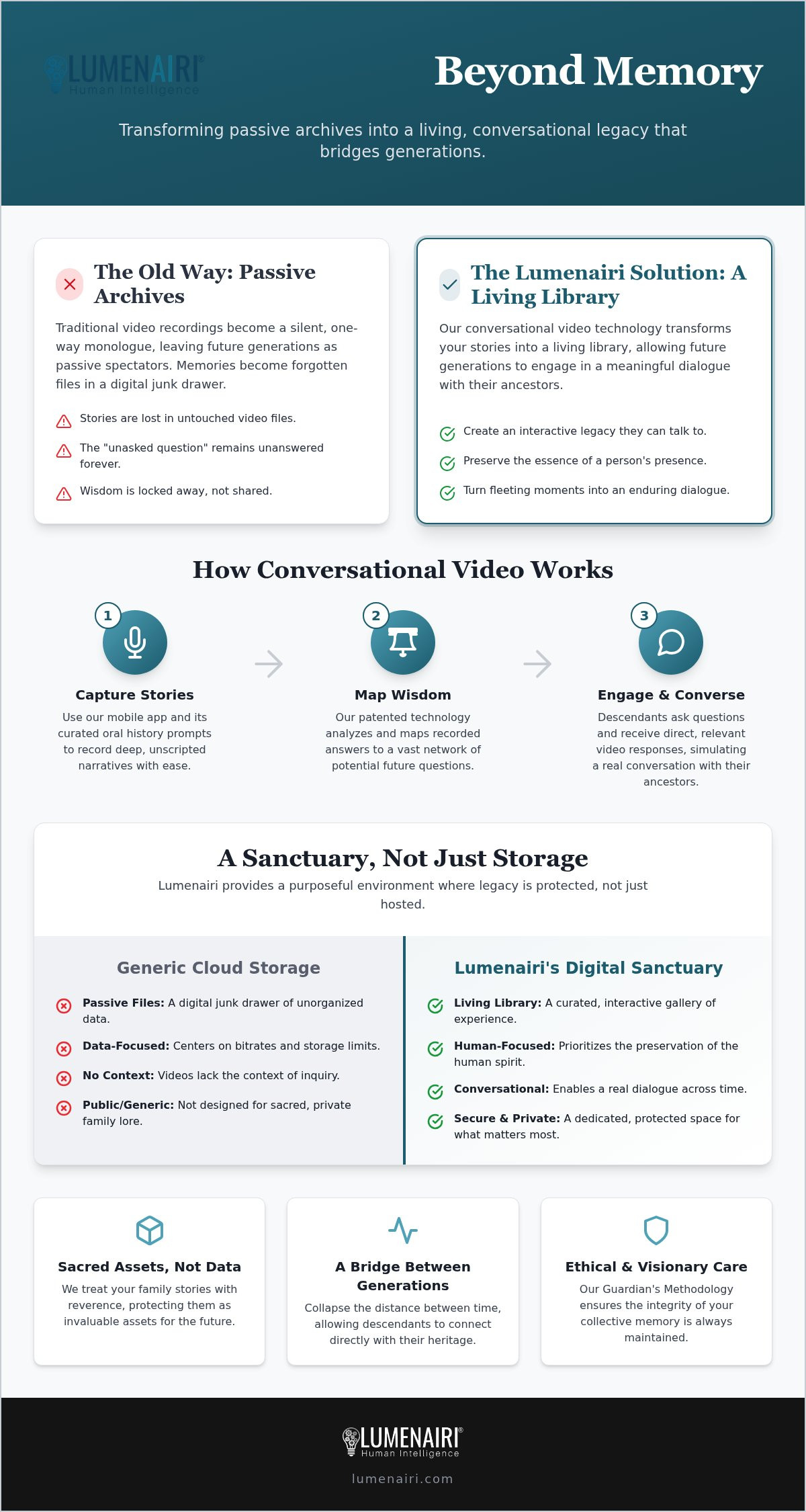
    The silence that follows a life is often filled with questions we simply forgot to ask. It’s a heavy, lingering weight. Most digital archives treat these moments as mere files to be stored and forgotten, but we believe your stories are a sacred asset. The Lumenairi Mobile App serves as a bridge between the present and the future, ensuring that human wisdom isn’t lost to the passage of time. We’re moving away from the era of the passive archive. Instead, we’re building a living library where the past remains present and accessible. This shift represents a fundamental change in how we perceive memory. A passive archive is often a graveyard of files, but a living library is a vibrant conversation that never truly ends.

    Data is a secondary concern here. While other platforms focus on bitrates and storage limits, our focus remains on the preservation of the human spirit. There’s an emotional imperative at play. If we don’t capture these stories now, they’ll eventually dissolve into the noise of history. We provide the means to turn fleeting conversations into a permanent legacy. It’s a commitment to the future. It’s a promise that the voices of those we love will continue to echo with clarity and purpose.

    The Burden of the Unasked Question

    A Living Library is a conversational asset that allows descendants to engage in a meaningful dialogue with their ancestors. Traditional video often fails future generations because it’s a one-way street. It’s a monologue that lacks the context of a real-time inquiry. When a grandchild watches a static video, they’re a spectator. Through our technology, they become a participant. There’s immense psychological value in hearing a founder or matriarch’s voice in direct response to a question. It provides a sense of continuity that a simple recording cannot match. It’s about the cadence, the warmth, and the specific wisdom that only their voice can carry. We don’t just record answers; we preserve the essence of a person’s presence. Understanding the empathy effect in recorded testimony reveals why this kind of authentic human connection is far more powerful than any synthetic approximation.

    A Sanctuary for Collective Memory

    We’ve designed the app to be a private, secure repository for what matters most. Unlike social media, where stories are often traded for engagement, this is a dedicated sanctuary. It’s a space where the Guardian of the family or institution manages the lore. This role is vital for maintaining the integrity of the collective memory. By grounding our approach in the traditions of oral history, we ensure that every contribution is treated with reverence. We aren’t just another cloud storage service. Generic storage is often a digital junk drawer, but our app is a curated gallery of the human experience. We differentiate ourselves by offering a purposeful environment where legacy is protected, not just hosted.

    The Science of Conversational Video: How It Works

    The magic of conversational video lies in its ability to collapse the distance between generations. It’s an intricate dance between recorded truth and future curiosity. The Lumenairi Mobile App facilitates this through a sophisticated mapping system that goes far beyond simple video storage. It doesn’t just hold files; it organizes them into a responsive, intuitive network. When you record a response, the Lumenairi Mobile App identifies the core intent and emotional resonance of your message. This ensures that when a descendant asks a specific question years from now, the technology retrieves the exact moment of wisdom they need. It’s a simulation of presence that feels startlingly real, turning a static recording into a vibrant, ongoing dialogue.

    This process transforms the user from a passive subject into an active contributor to a Living Library. By mapping individual prompts to a wide array of potential inquiries, the system creates a seamless conversational loop. The transition from your mobile device to the permanent library is instantaneous. There’s no need for complex editing or technical expertise. The innovation lies in the simplicity of the interface, which masks the complex algorithms working beneath the surface to preserve your voice, your image, and your unique perspective for the ages.

    From Recording to Interaction

    The logic of our platform is designed to be both simple and profound. You follow carefully curated prompts that are intended to elicit deep, unscripted narratives. Authenticity is our highest priority. We believe that Digital storytelling is most effective when it captures the raw, unfiltered essence of the speaker. This isn’t just for families. In an enterprise context, the app allows leaders to share specialized skills and institutional knowledge through interactive modules. It creates a loop of continuous learning and skills-sharing. Once the recording is complete, the app handles the heavy lifting of indexing and publishing. If you’re ready to see how this looks in practice, you can book a demo to explore the interface.

    Patented Innovation for Longevity

    Lumenairi Core is the foundation of this technical endurance. We’ve built this system to outlast the hardware of today, ensuring that stories remain accessible even as devices evolve. It’s a commitment to technical continuity that spans decades. Our pending patents for mobile conversational video ensure that the architecture is both unique and incredibly robust. Security protocols are equally rigorous. We treat your corporate heritage and personal memories as sacred assets. This means employing high-level encryption and ethical frameworks that protect your data from exploitation. We aren’t just storing information for next year. We’re guarding it for the next millennium, providing a sanctuary that remains unshakeable in a changing digital world.

    Legacy vs. Data: Why Lumenairi is the Prestige Choice

    Choosing a guardian for your personal history is a matter of profound weight. While text-based legacy tools provide a valuable record, they often lack the sensory richness of a lived experience. The Lumenairi Mobile App offers a higher register of preservation. It isn’t just about recording facts; it’s about capturing the specific resonance of a human life. We believe that true ancestry is felt, not just read. This is why we position our technology as the definitive choice for those who value the weight of experience over the mere accumulation of data. It is a commitment to the endurance of the spirit.

    There’s a vital distinction between a standard video memoir and an interactive digital legacy. A memoir is a static artifact that often fades into the background of a digital folder. An interactive legacy, supported by our Professional Filming Services, remains a vibrant part of the family dialogue. We treat your communication as a sacred asset. It is an investment in a presence that never truly leaves the room. By moving beyond passive archives, you ensure that your stories remain as lively and engaging as the day they were first told.

    The Founder Heritage Advantage

    Business leaders understand that institutional knowledge is the lifeblood of strategic continuity. They utilize our Founder Heritage solutions to secure the “Founder’s Blueprint.” This isn’t just a history of corporate milestones. It’s a living resource for new hires and future leadership. By using the app, a founder provides a permanent bridge for mentorship that transcends their physical tenure. It ensures that the wisdom that built the company remains unshakeable. It turns a leader’s experience into a strategic asset that continues to guide the organization for generations. The empathy effect in recorded testimony is especially critical here, as it explains how authentic human voice preserves the tacit judgment that no written document can fully replicate.

    Museum-Grade Preservation for Families

    We apply the same rigor found in our Museums & Archives Solutions to your personal family lore. When comparing the Lumenairi Mobile App to traditional journaling platforms or generic cloud storage, the difference in quality and intent is clear. Prestige matters when protecting collective memory. You aren’t just looking for a storage folder; you’re looking for a visionary guardian. Our archival methodology ensures that your most precious stories are treated with the same reverence as a museum artifact, providing a sanctuary that remains unshakeable for the next millennium.

    The Lumenairi Mobile App: Creating a Living Library of Human Wisdom

    Capturing the Spark: Using the Lumenairi Mobile App

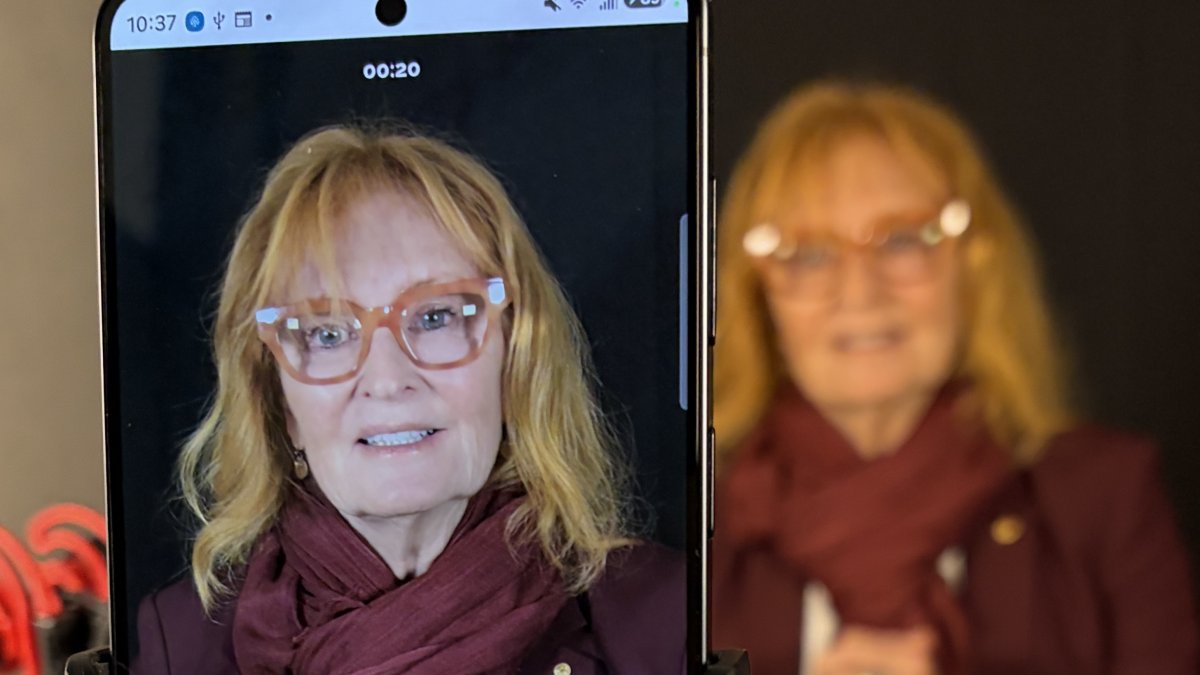
    Recording a legacy requires more than a camera; it requires profound intention. Before you open the Lumenairi Mobile App, consider the environment. Find a space where the light is soft and the silence is absolute. This isn’t just about capturing data. It’s about creating an atmosphere where resonance can flourish. By treating the recording session as a sacred ritual, you ensure that the speaker feels the weight and value of their contribution. The app acts as your silent partner, providing the technological assurance needed to turn a simple smartphone into a professional-grade archival tool. It’s a bridge between a fleeting moment and an eternal presence.

    The process is designed to be methodical and thorough, never rushing the storyteller. We believe that the best stories emerge when the speaker feels truly heard. This is why our Oral History Tool is built around the concept of patience. It invites the user into a process that feels both easy and significant. By following the rhythmic flow of the app, you can capture the essence of a person’s life without the stress of technical complexity. You are not just filming; you are guarding a piece of human history. It’s an act of responsibility toward the future.

    Your First Conversation

    To begin, simply navigate to the recording module within the interface. The design is elegant and accessible, ensuring that even the most tech-hesitant elders feel at home. You’ll find a curated list of legacy video interview questions. These aren’t just icebreakers. They are keys designed to unlock hidden wisdom, ancestral lore, and deep-seated memories. To achieve cinematic quality on your smartphone, we recommend a few simple steps. Position the subject in natural, front-facing light. Ensure the background is serene and uncluttered. If possible, use a small external microphone to capture the specific timbre of the voice. These small details transform a casual video into a permanent, high-status asset.

    Interacting with the Past

    Once the narrative is preserved, the true magic begins. Descendants don’t just watch; they engage. Within the interface, a grandchild can ask a question, and the system retrieves the corresponding wisdom in real time. It’s the experience of “talking back” to history. This interactive dialogue ensures that the story remains a vibrant part of the family’s daily life. As the Guardian, you can add curators to help manage the collection or set specific access levels for different family branches. This collective contribution allows your Living Library to grow over time, ensuring that every voice is heard and every story is protected. If you’re ready to begin this journey, get started with the Lumenairi Mobile App today.

    Securing Your Story: The Guardian’s Methodology

    The act of preservation is a heavy mantle. It requires a methodology that honors the past while securing the future. We believe that when you record a story using the Lumenairi Mobile App, you’re not just creating digital content. You’re entrusting us with a fragment of your soul. We treat these contributions as sacred assets. They are not data points for an algorithm to exploit. They are the bedrock of your family or institutional lore. This commitment to institutional-grade security ensures that your digital sanctuary remains unbreachable. We take this responsibility seriously because we understand that once a voice is lost, it can never be truly recovered. It’s a sacred trust.

    Ethics and AI Policies

    Our ethical framework is built on the principle of absolute integrity. We use AI solely as a bridge for retrieval, ensuring that the conversational video experience remains grounded in reality. We firmly stand against the “uncanny” misuse of likeness. Our technology is designed to honor the speaker, not replace them. We don’t generate new content; we facilitate the discovery of recorded truth. In an era of synthetic media, establishing provenance at capture is the cryptographic foundation that guarantees every recorded moment is verifiably authentic and cannot be forged or fabricated. Users retain total control over their narratives at every stage of the process. You decide who listens, who asks, and who guards the library. It’s your story, and it remains your property forever. This ensures that the dignity of the individual is never sacrificed for technological novelty.

    The Future of Your Legacy

    A legacy is only as valuable as its accessibility. We plan for the next century of access by ensuring our architecture is forward-compatible. This vision extends beyond the family circle. The same technology that protects your personal history integrates seamlessly with Enterprise Learning and Development and museum archives. It creates a unified standard for human wisdom. Whether it’s a CEO’s strategic blueprint or a grandmother’s secret recipe, the weight of the experience is preserved with equal dignity. It’s a bridge that spans across time and space. It connects the wisdom of the past with the curiosity of the future.

    The current generation has a unique opportunity to act as visionary historians. We invite you to step into this role with quiet confidence. It’s time to treat your family’s history with the reverence it deserves. Don’t let the technical difficulty of archiving stop you. Begin your Living Library today with the Lumenairi Mobile App and ensure your story endures for the next millennium. It’s an investment in your collective memory that will pay dividends for generations to come. Be the guardian your ancestors hoped for.

    Guarding the Echoes of Experience

    The decision to preserve a life story is an act of profound responsibility. We’ve moved beyond the limitations of static video to embrace a future where your wisdom remains an active, conversational presence. By choosing the Lumenairi Mobile App, you’re selecting a platform built by the pioneers of Dimensions in Testimony. This isn’t just software; it’s a digital sanctuary trusted by global museums and archives to protect the most significant narratives of our time. Capture cinematic quality recordings directly from your smartphone to ensure the specific cadence of your voice and the depth of your insight are never lost.

    This technology serves as a bridge, turning fleeting moments into an enduring Living Library for those who follow. It’s a commitment to the next century. We treat your communication as a sacred asset, protected by rigorous ethical standards and institutional-grade security. The burden of the unasked question no longer needs to haunt your descendants. You have the tools to ensure your legacy is both permanent and interactive. It’s time to step into your role as the guardian of your family’s lore. Download the Lumenairi Mobile App to Start Your Legacy and begin the journey of securing your story today.

    Frequently Asked Questions

    Is the Lumenairi Mobile App different from a standard video recorder?

    The Lumenairi Mobile App is fundamentally different because it prioritizes interaction over passive storage. Traditional recorders create static files that remain one-way monologues. Our platform transforms these recordings into a Living Library. It allows future generations to ask questions and receive answers in real time. We treat your stories as a bridge between eras. This ensures that the human element remains vibrant and accessible for decades. It’s a sanctuary for wisdom.

    How does the conversational video technology actually work?

    This technology functions through a sophisticated mapping system that identifies the core intent of your recorded narratives. When you use the app, you respond to specific prompts designed to capture your unique wisdom. Our patented process then maps these responses to a wide array of potential inquiries. When a descendant asks a question, the system retrieves the exact moment of wisdom they need. It creates a seamless, unscripted dialogue that simulates your physical presence.

    Can I use the app for corporate heritage and founder stories?

    We offer dedicated Founder Heritage and Business Solutions specifically for the corporate world. Leaders use these tools to document institutional knowledge and strategic blueprints. It’s a vital asset for Enterprise Learning and Development. By recording their insights, founders become a living resource for new hires and future executives. This ensures that the core values and pivotal lessons that built the organization are never lost to time or leadership transitions.

    Is my data secure and who owns the stories I record?

    You retain absolute ownership and total control over every narrative you record. We treat your contributions as sacred assets rather than mere data points. Our platform employs institutional-grade security protocols and rigorous encryption to protect your digital sanctuary. We don’t exploit your likeness or information for external purposes. Your legacy remains private and secure. It’s a sanctuary designed to honor the dignity of the individual and the integrity of the story.

    What happens to the Living Library if the technology changes in the future?

    We’ve built Lumenairi Core with a focus on longevity and technical continuity. Our architecture is designed to be forward-compatible. This ensures that your stories remain accessible even as hardware and software evolve. We aren’t just planning for the next decade. We’re planning for the next millennium. By using museum-grade preservation standards, we ensure that the weight of your experience is protected against the inevitable shifts in the digital landscape. Your story endures.

    Can I integrate professional filming services with the mobile app?

    You can certainly combine our Professional Filming Services with the Lumenairi Mobile App for a comprehensive legacy experience. Many families and institutions choose cinematic filming to establish a high-status foundation for their archive. These professional recordings are then integrated into the app’s interactive interface. This combination offers the visual depth of a documentary with the responsive nature of conversational video. It provides the most profound and enduring way to preserve a collective memory.

    How many people can access my family or organization’s library?

    Access is managed entirely by the designated Guardian of the library. You have the authority to add curators and set specific access levels for different family branches or organizational departments. This ensures that sensitive stories are shared only with the intended audience. Whether you’re managing a small family circle or a large institution, the platform provides the flexibility needed to grow your collection. It’s a collaborative space for collective memory.

    What makes Lumenairi a better alternative to text-based story apps?

    Text-based apps often lack the visual and auditory resonance that defines a human life. While written words are valuable, they can’t capture the specific sparkle of an eye or the comforting timbre of a voice. Lumenairi offers an interactive experience that text simply cannot match. We provide a sense of presence and continuity. It’s the difference between reading a history book and having a real conversation with the person who lived it.