
Company Heritage & Founding Story
Every company was once an act of faith. Make sure everyone can still hear it from the people who took the risk.
Every organisation has a founding story — the risk someone took, the belief they held before there was any evidence, the decision that set everything after it in motion. It is the foundation of the culture, whether or not anyone has ever written it down. And in most companies it lives in two places: a paragraph on the About page, and the memory of a handful of people. Lumenairi® changes that — turning the founders, families and long-serving people who carry your story into a Living Library™ that every employee, every new hire and every customer can actually talk to.
Why it works
Culture is not transmitted by values statements. It is transmitted by stories — and the people who carry yours are finite.
You company values poster hangs in the break room. It lists integrity as one of your values. Who better to tell the story of why that matters than your founder. The new hire clicks the QR code on the poster and meets your founder face to face. They learn that the company was founded in 1974 integrity was one of the principles that gave the company edge. It was a foundation for success.
That story exists. Too often it is held inside people — and people retire, sell, step back, hand over and pass on.
Most organisations record their founder properly for the first time when it has already become an act of remembrance. By then the questions no one thought to ask are unanswerable. Not lost in the sense of misplaced — lost in the sense of gone.
Lumenairi® turns the people who hold your story into a Living Library™ that anyone in the organisation can access — on their own time, in their own words, asking exactly what they want to know. Not a corporate film. Not a highlight reel with a soundtrack. A conversation, on demand, with the person who was there.

USe CASES
One day of filming. Available to the whole company the next day.
The most common reason a founding story never gets recorded is that it sounds like a production. It isn’t. Here is the entire process.
Step 1 – What to Ask

We build the questions with you.
Before anything is recorded, we assemble a question set — drawn from the back story, and what your teams and your customers actually ask. Why did you start it? What nearly killed it? Who took a chance on you? What would you never allow this company to become?
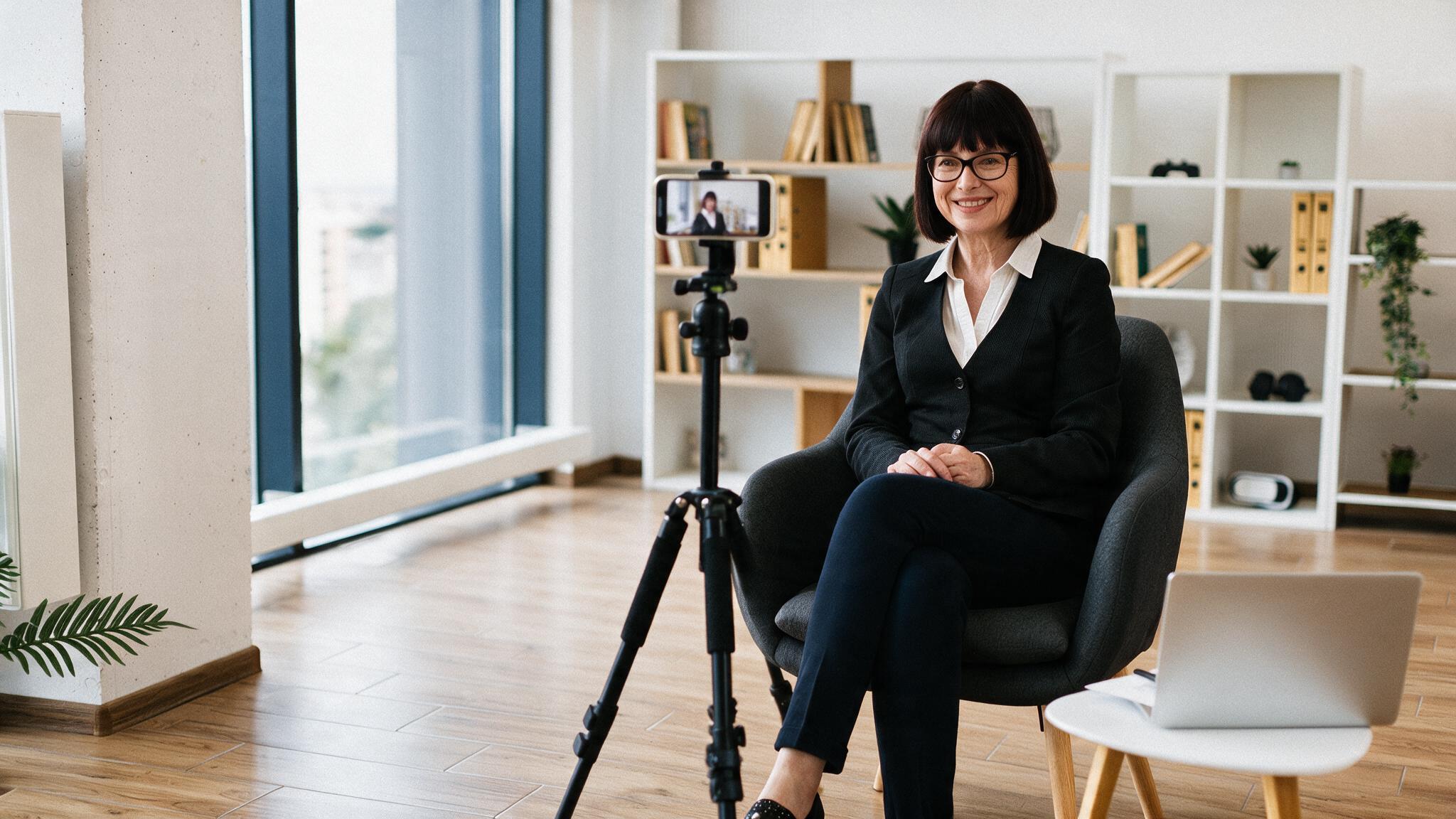
Feed in the story through your phone or desktop and the AI question builder takes care of everything else. The founder only has to do the one thing they have always been able to do: answer the questions simply and honestly.
Step 2 – One Filming Session

Filming is simple to do.
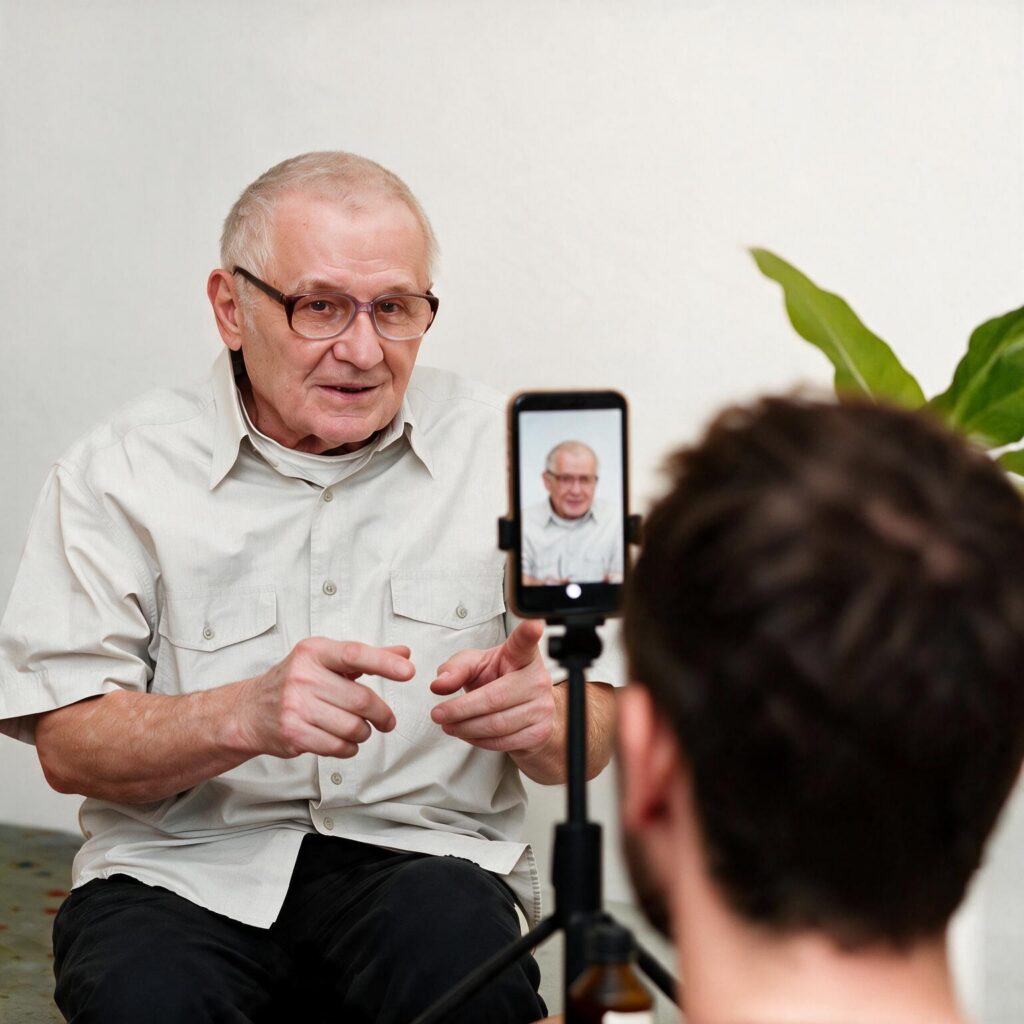
Recording typically takes two to four hours, on a phone or a camera, at the office, at home, or wherever the story actually happened. No studio. No production team. If an answer comes out wrong, they simply answer it again — nothing is one-take, and nothing is final until they say so.
Families, co-founders and long-serving colleagues can be recorded in the same session, so the story is told in more than one voice.
Step 3 – Instant Access

People start asking
Whether the interview is for the private archives of the famil or for instant viewing by the team, the filming session is instantly published to your Living Library™. You can QA it first, edit and improve it, or send it straight to your workforce to enjoy.
An employee, discovers the founder on your team app or on your website, asks a question and their founder answers directly, in their own voice. A Shareable link puts the same experience in front of a customer, a board, or a room at an anniversary dinner.
Things We Are Often Asked
WHAT IF…
Our founder has died, or has already left. Then the story lives with the family, the co-founders, and the people who have been there thirty years. That archive is worth as much — and it is more urgent, because it is spread across people who are also finite.
Our founder is not a performer. Good. Nobody wants a performance. The people who are least polished on camera are consistently the most compelling, because they are being their authentic selves.
We’re a hundred years old — where would we even start? With the people who are here now. Heritage is not a single recording; it is a foundation you keep building on. Most organizations start with one session but end up with many people who make up the heritage and culture of the organization today.
We don’t have a communications budget for this. This is not a documentary commission. It is a subscription, one afternoon, your existing phone and some basic vlogging equipment.
Do you provide a service to help with this. Absolutely. We frequently work with companies and provide the founder story as a professional service. We are experienced in making the founder comfortable and giving them a wonderful personal storytelling experience.
USe CASES
The origin story is the foundation. This is what you can then build on it.
Your first founder or family member recording session becomes an asset your entire organization draws on — for onboarding, culture building, succession planning, and for your customers. Then over time you add to your collection with executive team members, long serving employees, special skills and insights, and company culture is stored and shared with everyone.
Day One
Every new hire meets the founder.
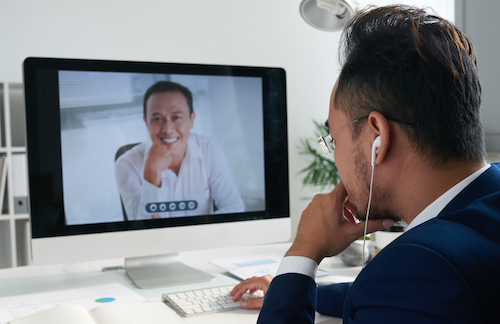
A new starter in a regional office opens the app on their first morning. Before the IT setup, before the team lunch, they are in conversation with the person who started the company. They ask why it exists. They ask what it was like at the beginning. They ask what they should never do here.
Twenty minutes later they don’t just know what the organisation does. They know what it is for — and they heard it from the one person whose answer carries the most weight.
Culture in Practice

Your values are in the Living Library™.
Every stated value has a story underneath it: the order that was turned down, the customer who was made whole at cost, the hire who was kept on through a bad year. Those stories are what actually govern behaviour, and they are almost never written down.
When your people can ask the founder “when did that principle cost us something?” and get a real answer, the value stops being a word on a wall and becomes a precedent.
Succession and the Next Generation

A living legacy for the future.
In family and founder-led businesses, the handover is rarely about process. It is about the thousand pieces of judgement the next generation has not needed yet, and will not know they need until the day they do.
Recording the founder before the transition — not during the crisis, not at the retirement dinner — gives the incoming generation something to consult. And it gives the outgoing one something few people are ever offered: the chance to be asked, at length, about the thing they built.
Transitions
Retirement, Sale, Acquisition
Every transition puts the story at risk — a retirement, a merger, a sale, a rebrand, a generational handover. The people who hold the institutional memory move on, and within a few years the acquiring organisation has the assets and none of the identity that made them worth acquiring.
Recording the story before the transition protects it on both sides. The people who built it keep their authorship. The people inheriting it get something no data room contains: the reasoning behind the company they now own.
Do it before the announcement, not after. Once a transition is public, the recording stops being heritage and starts sounding like a defence.
Customers and Clients

The ‘About’ page that comes alive.
Your differentiator is not your product specification; your competitors can match that inside a year. It is that this organisation was started by particular people for particular reasons, and still operates that way.
A Shareable link puts your founder in front of a prospective client, a tender panel, a retail customer scanning a code in-store, or a partner deciding whether to trust you. They ask their own questions. They get answers from a person, not a brand.
Anniversaries

The centrepiece of the fiftieth.
Anniversaries are usually the moment an organisation notices its own history — and usually the moment it produces a commemorative video that is watched once and archived.
A Living Library™ is the alternative: a permanent, growing, interactive record that the anniversary launches rather than concludes. It gives the milestone something to be for, and it gives the next generation a reason to keep adding to it.