Built With Archivists in Mind
Most tools available for archivists are not built for or by archivists.
General video hosting platforms — Vimeo, Wistia, and their equivalents — are built for marketing teams. They optimise for views, engagement, and lead generation. They have no concept of chain of custody, no metadata architecture designed for archival use, no workflow built around the oral history process. When institutions use them for archival purposes, they’re forcing a marketing tool to do a job it was never designed for.
Open-source solutions like OHMS require significant technical implementation, ongoing IT support, and substantial institutional knowledge to maintain. They’re free to acquire and expensive to run. And they still don’t solve the collection workflow — they only enhance access to content collected elsewhere.
Custom development costs hundreds of thousands of dollars, takes years to implement, and creates institutional dependency on systems that are difficult to maintain and impossible to migrate.
Lumenairi® was built to solve all three problems — a purpose-built archival platform that institutions can deploy immediately, without IT overhead, at a cost that makes sense for collections of every size.
Platform Features
Everything an archivist needs. Nothing they don’t.
Use Lumenairi® anywhere you need to collect human biography and provide trustworthy, human inights to human experience.
- Collection & Capture 4K and 8K studio capture for museum-grade collections. AI-supported interview workflow — question preparation, session management, follow-up prompting, real-time publishing. Content is complete and catalogued the moment recording ends. Minimal post-production. No editing queue. No vendor dependency.
- Archival Architecture Dedicated database instance — your collection is yours, never shared or commingled. Chain of custody preserved from first recording to final access. Privacy controls down to individual question level — every decision about what is seen, by whom, and where remains at the curator’s discretion.
- Catalog & Metadata AI-generated catalog entries, transcripts, and metadata bundles created automatically on recording. Transcript editing tools for curatorial review and correction. Export files and metadata packages for integration with existing institutional systems.
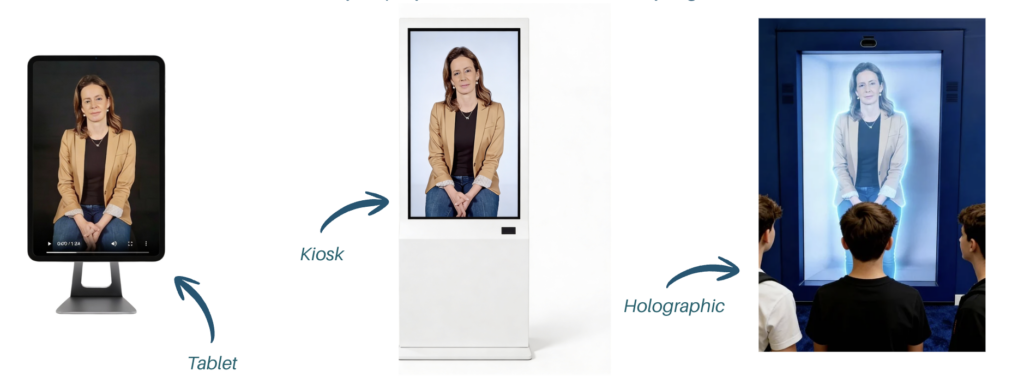
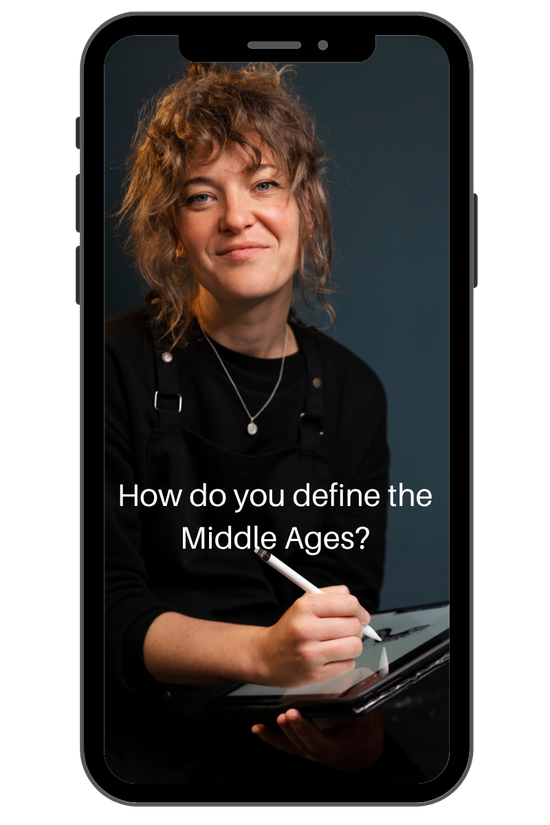
- Access & Discovery Question-led discovery — audiences ask what they want to know and receive answers directly from the people in the collection. Embeddable for exhibit displays, websites, digital catalogues, and educational platforms. Exhibit mode for large-format interactive display in physical spaces.
- Analytics Content analytics — understand what your collection contains and how it is used. User analytics (Archivist Pro) — understand who is engaging with your collection and how.
- Translation & Language Multi-language support with full platform localisation. Four languages included at Archivist tier. All available languages at Archivist Pro.
Use cases
What Lumenairi makes possible.
From local collections to national institutions, Lumenairi is built for the full range of serious archival work.
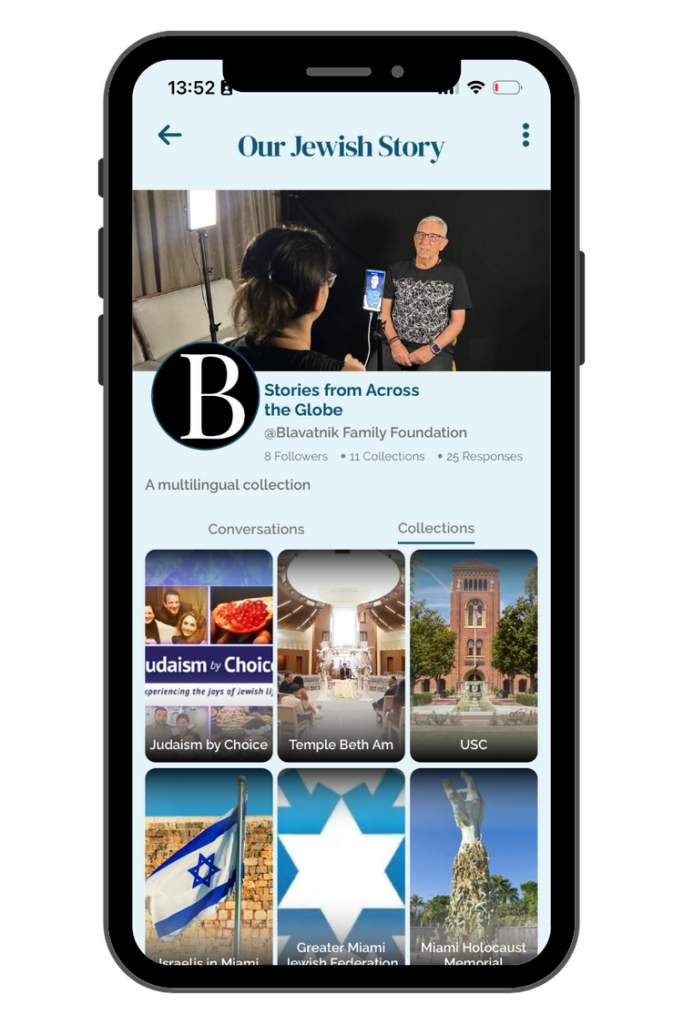
Exhibit Companion Q&A
Your next exhibit has a voice — let visitors hear it.
Place an interactive conversation alongside any physical exhibit. Visitors ask the questions they actually have and receive answers directly from the curators, artists, scholars, or witnesses whose work is on display. Not a text panel. Not a QR code linking to a passive video. A real conversation with someone who knows. Embed the same experience on your website or exhibit app so the collection extends beyond the gallery walls.
Oral History
The people who hold your history won’t always be here.
Lumenairi® gives institutions the tools to collect lived experience from the communities they serve — members, elders, founders, witnesses, and everyday people whose stories belong in the permanent record. Build a searchable story library organised by person, topic, era, or theme. Share it with your community. Publish it to the world, or keep it private. The collection grows with every conversation.
Instant Archive
Complete and catalogued the moment recording ends.
Lumenairi® AI supports the entire oral history workflow — preparing questions, managing the interview, prompting follow-ups, generating transcripts, creating metadata, writing catalog entries, and publishing content. When the session ends, the archive is ready. No post-production. No editing queue. No weeks of processing before a recording becomes accessible. The moment the conversation is over, it belongs to history.
Education and Outreach
Turn your collection into a classroom.
Create engaging learning resources for schools, universities, and remote audiences — built from the voices and expertise already in your collection. Embed content directly on your site, share links with educators, or build structured learning pathways around specific interviews. The same collection that serves researchers can serve students — without duplication of effort or additional production cost.
Virtual Tours
Let the artist walk you through it. Let the curator explain every choice.
Lumenairi enables conversational virtual tours of your museum, gallery, or cultural site. Imagine a visitor exploring your collection online, guided not by text descriptions but by the artist who made each piece — answering questions about intention, process, and meaning. Or a tour led by the curator who assembled the exhibition, explaining what each work reveals when seen alongside the others. Lumenairi makes this possible without a film crew, without a production budget, and without ongoing technical support.
You Control Your Content
Provenance stays where it belongs — with you.
Every collection on Lumenairi belongs entirely to the organisation that created it. Your database is dedicated and never shared or commingled with other institutions’ content. Privacy controls are granular down to the individual question level — you decide what is accessible, to whom, and under what conditions. Content can be restricted to researchers, opened to the public, shared with partner institutions, or kept entirely private. Every decision about access, visibility, and distribution remains at the discretion of your curatorial team. Always.
Display in many different ways